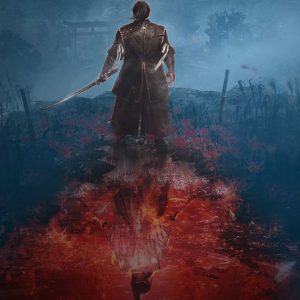
The Nioh games are known for their clear-cut good versus evil stories. It’s always about strong versus weak, with not much in between. From fighting clans to sneaky politicians, this simple good-and-bad setup is key to Team Ninja’s made-up history. Nioh 3 uses this black-and-white view for the story of the Tokugawa brothers in the early 1600s. You play as Takechiyo, who is good – honest, fair, and proper. Your brother, however, is bad, a jealous figure who gets mixed up with old powers he doesn’t understand. His craving for power and fame is so strong that he accidentally opens a strange ‘crucible’ from deep space and time. This dark force then spreads into four important periods of Japanese history. Oh dear!
And so, the story of Nioh 3 begins. You, playing as the weakest grandchild of the famous Tokugawa Ieyasu, are suddenly sent through different times in Japan. It’s your job, and your destiny, to step into the middle of tricky political fights from the shogunate era. You must stop the evil influence your brother unleashed across the Heian period, the Bakumatsu period, ancient times, and more. Even for Nioh, this story is a bit wild. But I think that’s part of its fun.
This ‘time travel’ idea works well for Team Ninja. After two games focused on the big wars of the Sengoku period, this new idea lets the developers explore other parts of Japanese culture. They mix history with myths and give more meaning to the ‘spirit stone’ item, which is central to Nioh’s complex story.
I don’t think it adds a lot to the Nioh story itself, though. Most of the story is told through dramatic cutscenes that can be confusing if you’re not paying close attention. Short animated scenes show you why characters do what they do and what the main fights are about. There’s a lot of shouting, people dying, and requests for the main character to keep going while others handle things behind the scenes. The storytelling feels a bit out of place for the time, but that’s not why most people play Nioh, is it?
For me, the real draw is the fighting and managing your character. Yes, really – building up your character has always been the best part of Nioh. The earlier Nioh games were a treasure trove for players who love collecting loot, and Nioh 3 is even better. Now, you can enjoy two full character builds: samurai and ninja. Before, you had to pick one, meaning fast weapons like the kusarigama or dual swords had to share a build with heavy weapons like the naginata or odachi.
In Nioh 3, you can switch between ninja and samurai whenever you want. This means you have two completely different character setups ready to go with just a button press. It makes sense to have your ninja, who can dodge without using energy and easily attack from behind, focus on fast moves that use up energy. Your samurai, on the other hand, can deal big damage with slower attacks that use a lot of energy. There are probably other ways to set things up, but this strategy worked for me through 60 hours of Nioh 3, with only a few tough spots. So, it’s a bit easier than the other games.
But having two setups means two sets of menus to manage. I once spent about 28 minutes straight just looking at stats, armor bonuses, and the tiny differences between small boosts. I know some of you might be zoning out as I say this, sorry. But others are probably nodding along, thinking ‘yes, yes,’ because you, like me, are a bit obsessed and find comfort in this kind of detailed spreadsheet management.
Thanks to the smart way Nioh 3 handles character levels, every small stat increase matters. Changing your gear every five levels or so is a big part of the game. Team Ninja made it easy to sort through your lower-level gear when you visit a shrine. This gets rid of some tedious tasks and gives you materials to level up almost for free. You can also have the game automatically equip the best gear you have. You can even set it to consider weight or set bonuses, so you won’t accidentally get stuck trying to fight a tengu because you’re too heavy.

Once you’re all set up, it’s time to get ready for battle. The large areas in Nioh 3 are a bit like Elden Ring. There’s a main goal for the story, but it’s surrounded by plenty of optional things to do. You can clear out enemy camps, hunt down tough monsters, chase cats, shoot weasels out of the sky, fight secret bosses, and try to weaken the giant, scary ‘Crucible’ that hangs over everything. This isn’t like Far Cry or Assassin’s Creed. Team Ninja calls Nioh 3 ‘open field,’ not ‘open world,’ and I think the size and layout of the maps are just right. I only got bored with one of the four big areas, and that was because I had leveled up too much by replaying a side mission to get gear for a heavy weapon build that carried my samurai through most of the game.
As is usual for the series, the combat is top-notch. Nioh 3 is the peak of this. I was unsure at first about separating ninja and samurai skills (‘I want cool moves for all weapons,’ I grumbled when it seemed like the tonfa weapons were only for one style). But after a few hours, I was convinced. I can’t imagine going back to Nioh 2 now; the difference between the styles feels so natural and easy to understand, it’s hard to believe it was ever different. The button to switch styles also acts as your ‘burst counter.’ This means powerful attacks with a red glow can only be stopped by switching styles at the right moment. This is built into so many enemy attacks that the game forces you to constantly switch between the two styles. Use both, or you will die. That’s the unofficial motto of Nioh 3.