Martin Melbardis first started making games with Campaign: Fall Blau. That was a fun little game about World War II, where you rolled dice to play by yourself. Since then, he started his own game company called Solo Wargame. He’s made 13 different and interesting ‘roll and write’ war games. These games cover many topics like World War I (Trench Tactics), World War II (Operation Barbarossa, Lone Wolf: U-Boat Command, and War in the Pacific), the wars of Napoleon (Siege Works), the Crusades (Crusade: Road to Jerusalem), and Ancient Rome (Rome Must Fall). His newest game, Fliegerkorps, is all about the air battles in WWII. It looks really neat, so I talked to Martin to get more details about it.
Right now, as you read this, the game is on Kickstarter, but time is running out. You can support the project at this link:
Grant: Welcome back to the blog. What is your new game Fliegerkorps all about?
Martin: Hello everyone, it’s great to be back! Fliegerkorps, my newest game, is a game you play by yourself. It’s about leading a German air corps, which is a big group of planes, through one of three real-life campaigns: the Battle of Britain, the fight in Russia (Barbarossa), or the Mediterranean. When you start the game, you pick a leader for your air corps and choose four airplane cards to make up your force. Over 12 turns in each campaign, you have to manage your planes, fuel, and groups of planes while the enemy keeps attacking from the air, land, and sea. You need to finish enough missions to earn points and help your side win before your forces get worn out.
Grant: Why did this topic interest you?
Martin: I’ve always loved military airplanes, ever since I can remember. But honestly, it really started recently with late-night videos on YouTube about the Battle of Britain. Watching those old clips of Spitfires fighting German planes really got me hooked. After a few days, I realized I’d never seen a war game where you managed a whole air corps. I’ve seen plenty of games about dogfights or controlling a small group of planes, but never at the level where you have to deal with getting supplies, fixing planes, and planning big attacks. I soon decided I wanted to make a game that felt like you were in a smoky control room in 1940, watching your planes slowly get destroyed in battles, while your commanders kept asking for more. One night, I quickly wrote down some ideas for the game and couldn’t sleep until I had the main parts figured out.
Grant: What is your main goal with this game?
Martin: My goal was to make a war game that’s not too hard, but still makes you think. It’s a game about air battles that you play by yourself. I wanted it to feel exciting but also easy to understand. I wanted players to roll dice, make important choices, and always think about how much risk they were taking versus how long their forces could last. Most importantly, I wanted to capture that feeling of sending planes out, losing some, fixing them up, and then sending them out again.
Grant: What books or information did you use to make sure the historical details were correct?
Martin: The main book I used was the Rand McNally encyclopedia of World War II. It helped me with the history of WWII planes, general information about the Battle of Britain, Barbarossa, and the Mediterranean, and when planes were made and used.
I’ll admit, I’m a very visual person, and that affects everything I design. Watching YouTube documentaries about Battle of Britain dogfights, the early chaos of air wars, and how the German air force worked kept me excited and taught me more about the subject throughout the whole time I was making Fliegerkorps.
Grant: What battles are included in the game?
Martin: The battles in Fliegerkorps are more about general missions than exact recreations of fights. For example, a possible attack on Malta is shown as a big Campaign Mission, not a detailed battle plan.
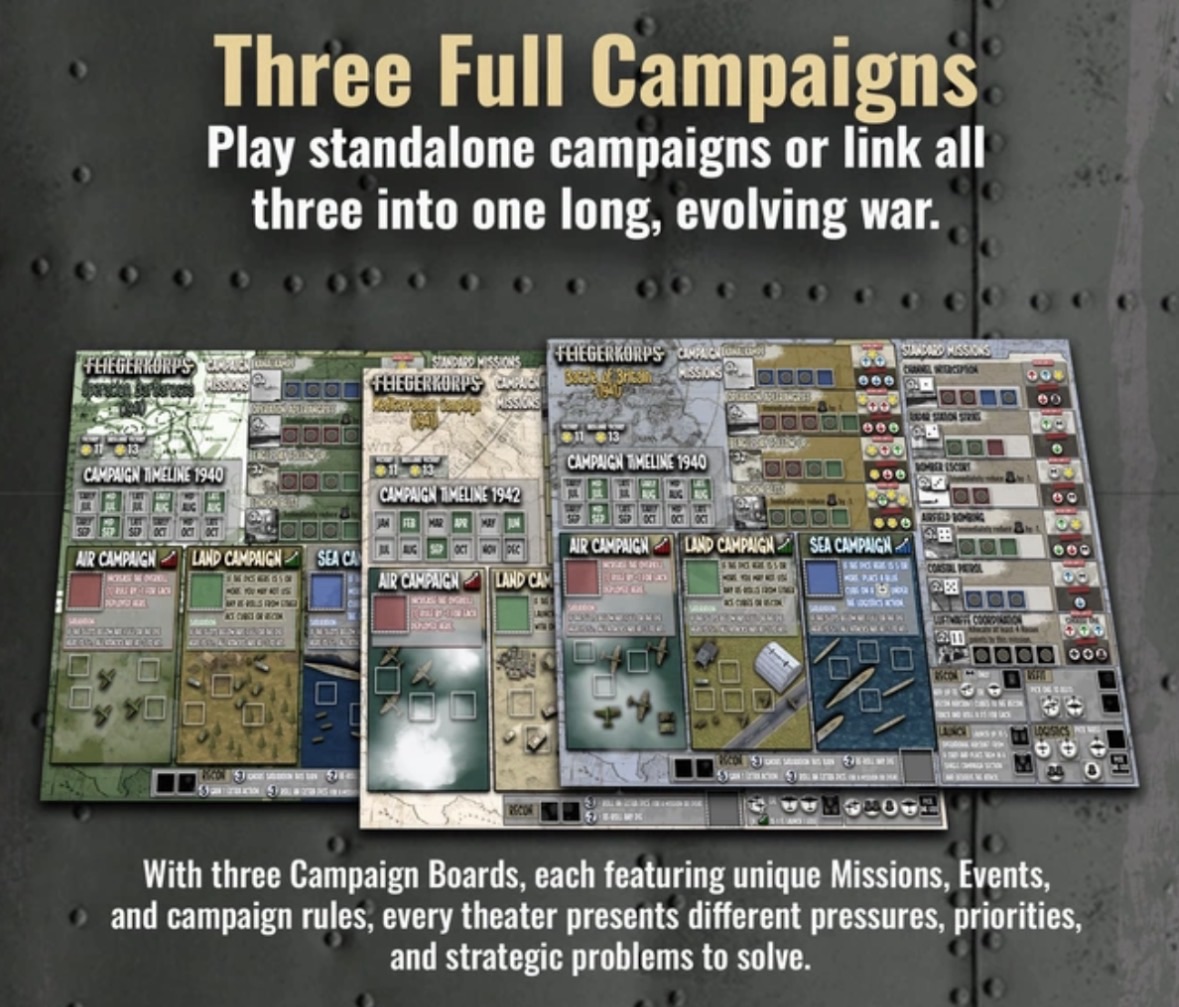
The game has three campaigns: the Battle of Britain (1940), which is about fighting for control of the sky; Barbarossa (1941), which mixes air and ground fights on the Eastern Front; and the Mediterranean (1942), which focuses on attacking supply ships, the siege of Malta, and helping ground troops in the desert. Each campaign has its own way of setting up missions and how much pressure you’re under. So, while the main game rules stay the same, the challenges change depending on where you’re fighting.
Grant: What parts of the early air battles of WWII did you need to put into the game’s design?
Martin: I wanted this game to feel very real in how you control an air corps in WWII, but without getting too bogged down in the small details of individual fights. Several important things I needed to show in the game were how planes move between being ready to fly and being repaired, how limited supplies were, and how the enemy’s attacks kept getting stronger. This is shown by the Air, Land, and Sea Campaign Dice. I also wanted the game to show that these campaigns involved fighting on many fronts. Air operations rarely happened by themselves; they affected and were affected by what was happening on land and at sea. It was important to me that the player could really make a difference in the bigger war across all three areas: Air, Land, and Sea.
Grant: How does the player have to balance their missions, fuel, planes lost, and worsening war conditions?
Martin: In the Mission Phase, all ongoing mission timers go down by one. If they hit zero, you fail the mission, so you can’t ignore missions for too long. If you let timers run out, you’ll face bigger problems like losing points, the Campaign Dice going up, or more enemy forces showing up. If you decide to do those missions, it will cost fuel and you risk losing planes. Sending planes out costs fuel, and after they attack, you move them to the ‘Refit Row’ on the plane card for repairs. Bigger planes like bombers take longer to get ready again than smaller fighter planes. So, every turn is a balancing act. The pressure slowly builds over the 12 turns, and that feeling of being under pressure is really what the game is all about.
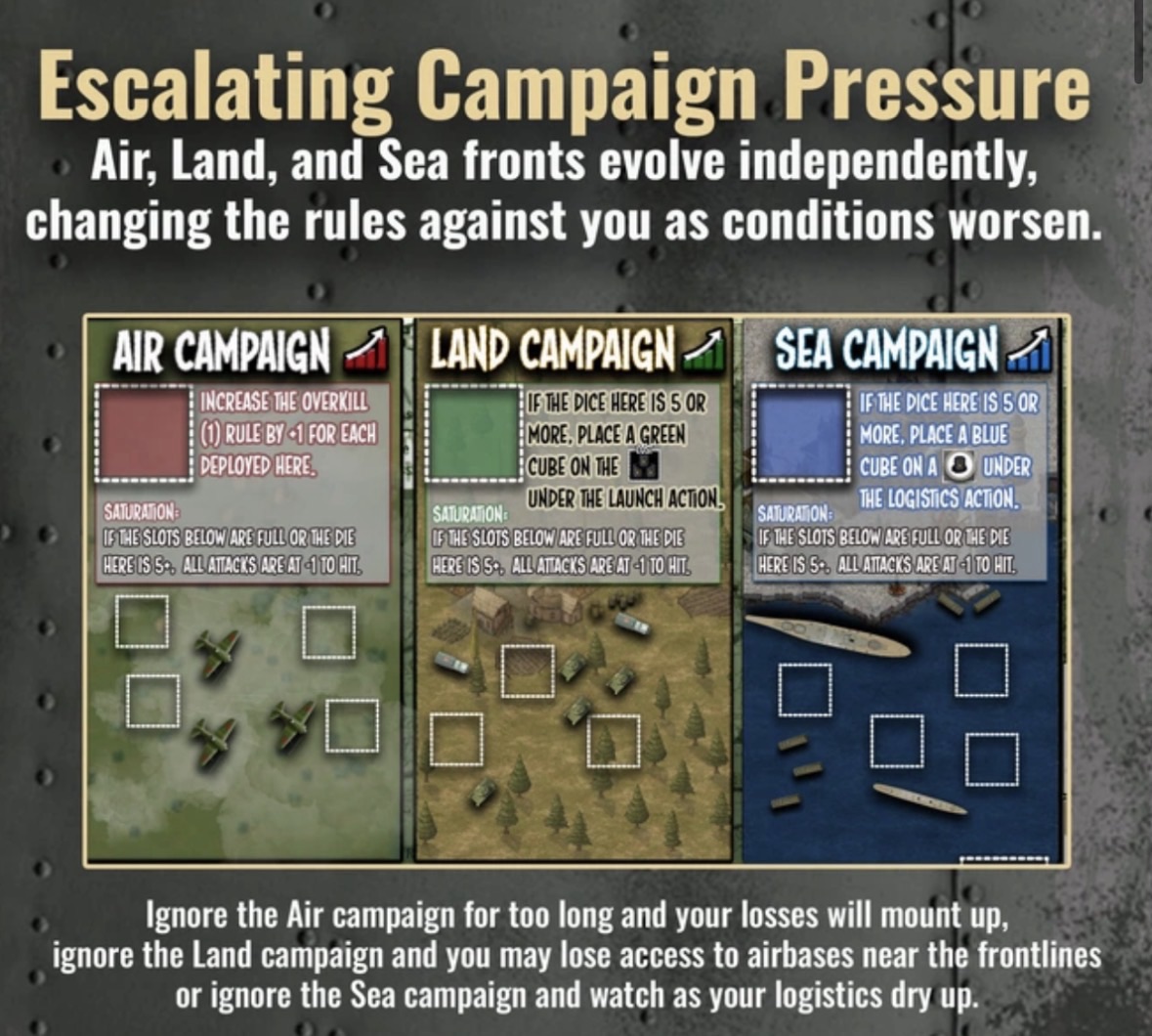
Meanwhile, Campaign Dice keep track of the overall pressure in the Air, Land, and Sea areas. As missions and events add up, those numbers can slowly go higher. If a Campaign Die ever reaches 5 or more, you’ll face ‘Saturation’ problems, and certain rules for that area will kick in. This will give you fewer choices and make future attacks in that area even harder.
Grant: How does the pressure from air, land, and sea campaigns affect the player?
Martin: All campaigns have a game sheet with three Campaign Sections: Air (red for enemy fighters), Land (green for ground forces, anti-aircraft guns, and buildings), and Sea (blue for supply ships, navy support, and supply lines). Each section has its own Campaign Die that shows how bad things are getting in that area. The higher the number, the worse things are for the Germans. This means more enemy pressure, harder challenges, and nastier effects. If a section becomes ‘Saturated,’ it greatly reduces how well you can deal with that Campaign section. Also, that section’s specific penalty will apply (like in the Battle of Britain, where if the Land die is 5 or more, you can’t re-roll dice). If you ignore any section for too long, the problems will get worse and worse over the turns.
There’s also a chance of a ‘Campaign Collapse.’ This happens if any two of those dice ever hit 6 at the same time (Air + Land, Sea + Air, or any other pair). If that happens, the whole campaign falls apart, and you lose right away. No points are counted; it’s game over. It’s a point where one part of the war breaks down and pulls everything else with it.
Grant: What is the ‘dynamic mission system’? How does it work?
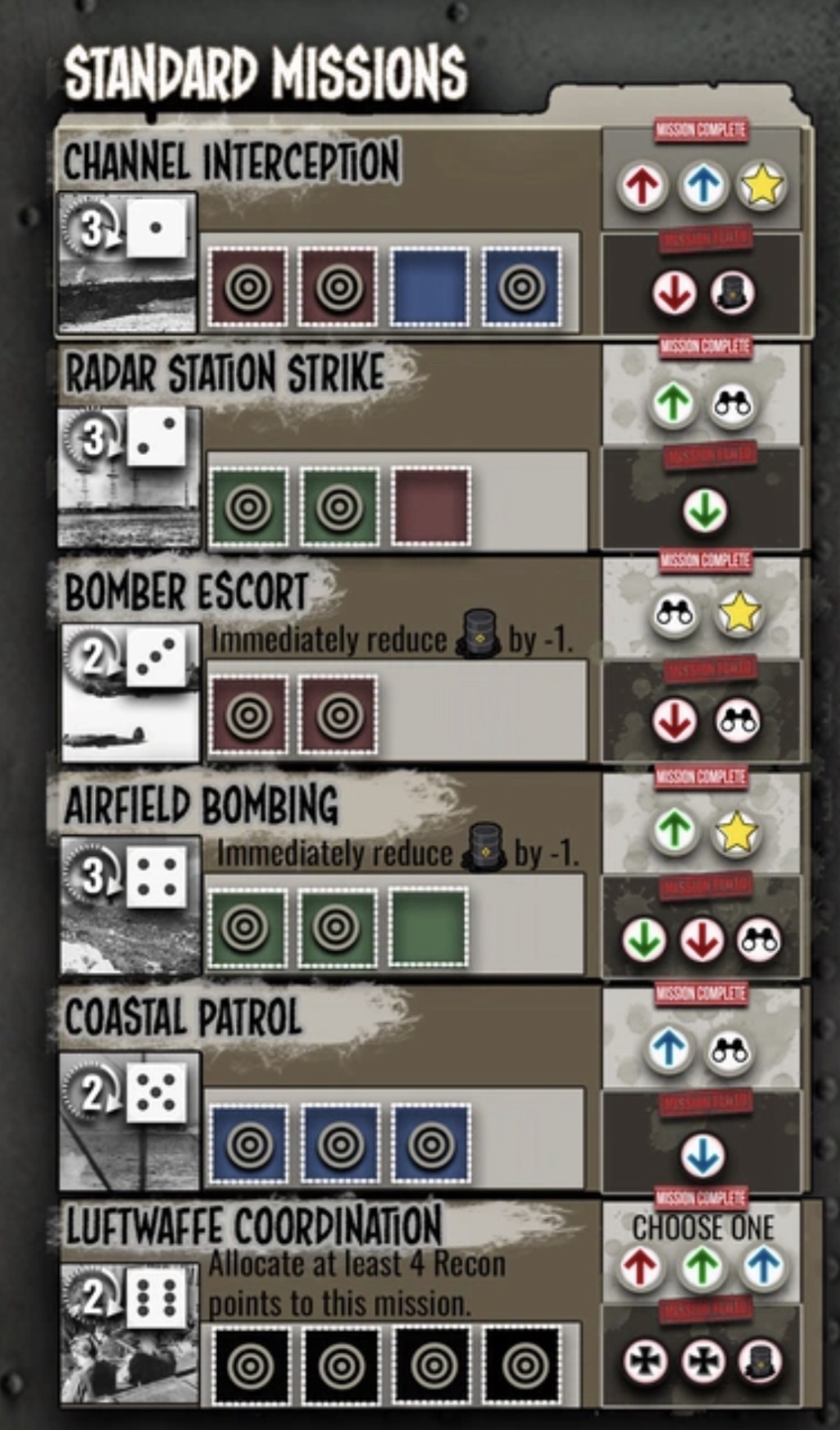
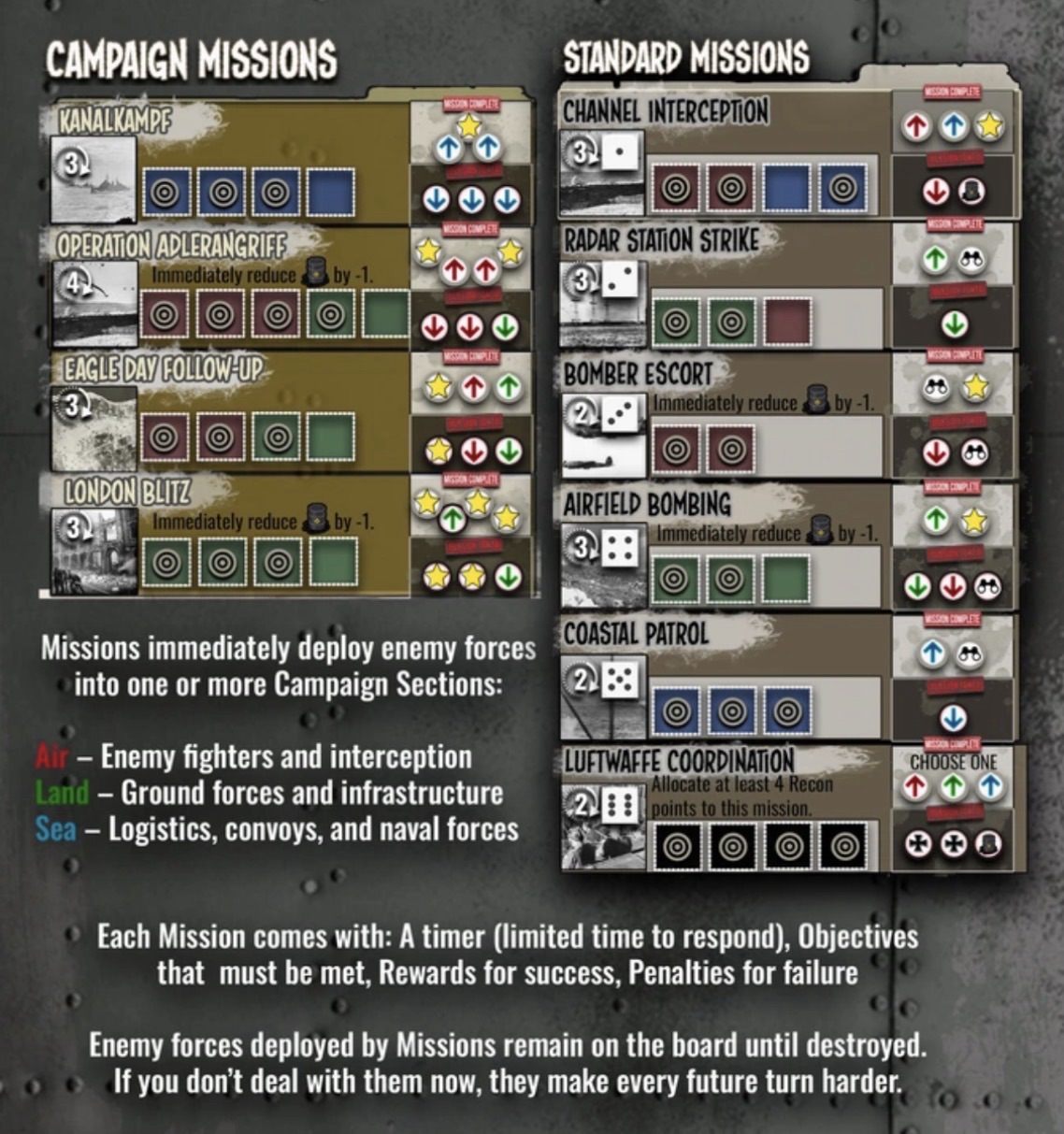
Martin: Missions are the main part of Fliegerkorps. New ones pop up every turn during the Mission Phase. Each mission has a die that acts as a timer, which you reduce by 1 each turn. This means no mission lasts forever and can run out of time if you don’t finish it. This really helps show how urgent things were in history.
Usually, missions are created by rolling a 6-sided die on the ‘Standard Mission’ table for regular tasks like fighter patrols or attacking supply ships. This also places enemy cubes in that section. However, if you land on a green spot on the Timeline, you skip the roll and get a ‘Campaign Mission.’ These have bigger risks but also bigger rewards. Campaign Missions are special, real-life operations like the bombing of London or the surrounding of Kiev.
Grant: What choices does the player have for building their Fliegerkorps?
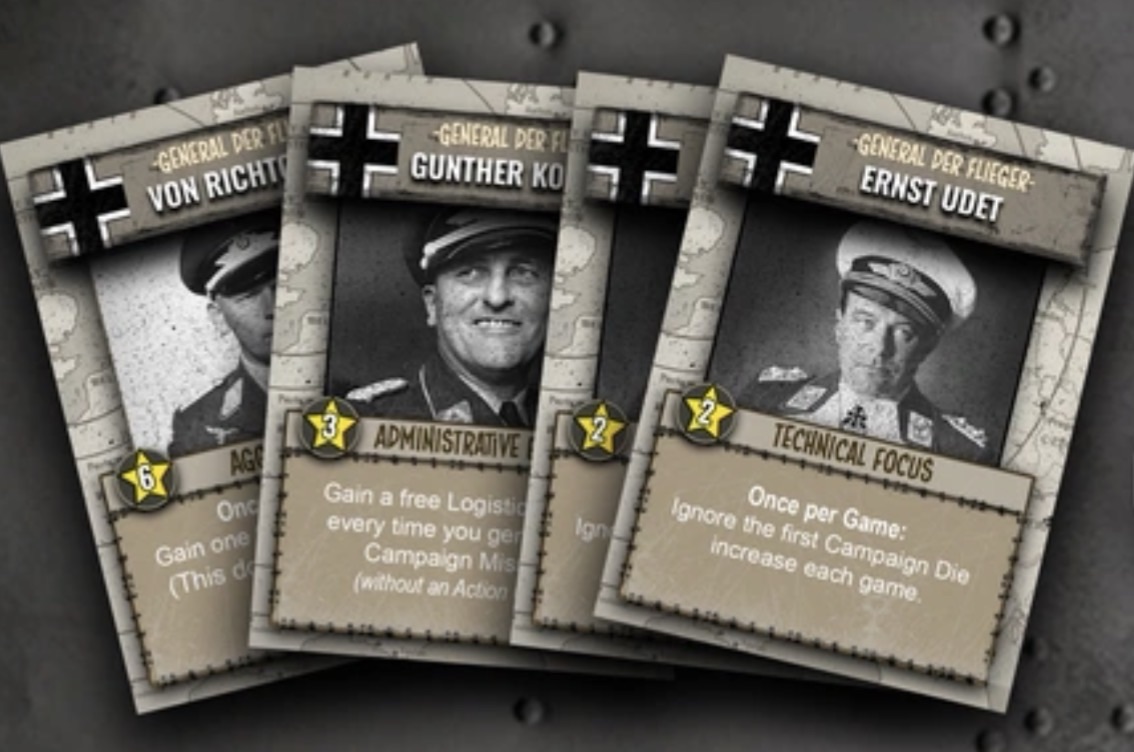
Martin: I really wanted to include some way for players to make their own choices or build their forces in the game. This lets players create their own Fliegerkorps using a strict budget of 25 Victory Points (VP).
Before each game, you start by choosing a Commander card and paying its VP cost. Commanders simply give you one, but powerful, special ability. A leader who likes to attack, like Richthofen, makes your attacks stronger, while others might help you be more efficient or have more control. Always choose one that fits how you like to play.
Next, choose exactly four Aircraft cards. Remember that some planes can only be used in certain places or years. It’s usually best to have a mix of fighter planes, bombers, and some planes for looking around (Recon).
If you have any VP left over, you can always buy extra black Fuel cubes or white Iron Cross cubes (for important re-rolls). In Campaign mode, after each campaign, you get a chance to make your Fliegerkorps even better by buying upgrade cards or swapping out plane cards as newer planes become available in later campaigns.
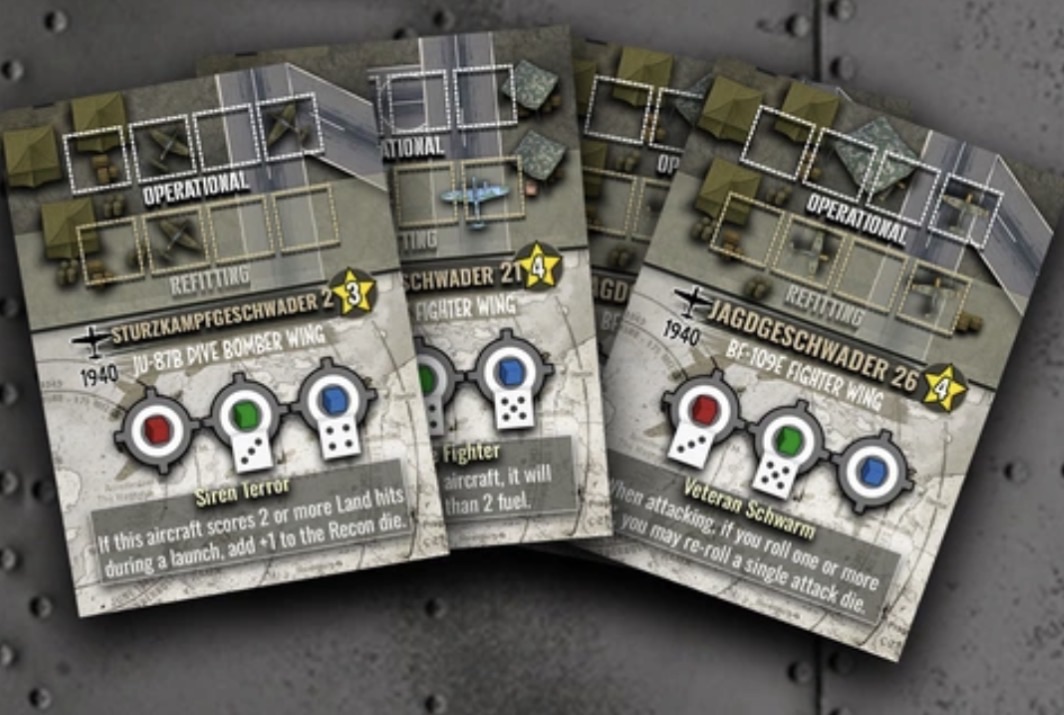
Grant: What does an aircraft card look like?
Martin: Aircraft cards are the real stars of Fliegerkorps. They include fighter planes, dive-bombers, recon planes, bombers, or even heavy fighter groups. Each has 2-4 grey cubes to show how strong the groups of planes are. I honestly think one of my best ideas for the game was to have a little airfield picture on the top half of each aircraft card. This picture is split into an ‘Operational Row’ for planes ready to fly and a ‘Refit Row’ just below it, for damaged planes that are being fixed or getting parts.
Each card also shows how well it attacks against Air, Land, or Sea, plus a special ability that will help you during the Campaign. Also, each card says if it’s a Large or Small aircraft type (which affects some actions; the reason for this is that bombers need a lot more fixing up than small fighters). Finally, all cards have a VP cost to buy them with your 25 VP budget, a year they become available, and sometimes icons for Recon.
Grant: What is the ultimate goal for the player in the game?
Martin: The goal is all about how well you managed your plane attacks to finish as many important missions as possible before time runs out. At the end of a tough 12-turn campaign, it really comes down to how much you pushed aggressive attacks versus how much you focused on repairing and getting planes ready, and dealing with the limited supplies of WWII Germany. At the end of the game, you add up all the points you earned from finishing missions and any bonuses from keeping the Campaign dice low enough. Then you check that total against the Victory chart on your game sheet. Each campaign has its own required totals. The difference between a ‘Victory’ and a ‘Brilliant Victory’ is just having a few extra points to upgrade your Fliegerkorps at the end of the campaign (and, of course, bragging rights).
Grant: What does the Game Sheet look like?
Martin: The Game Sheet in Fliegerkorps is set up so you can see everything at a glance. I always try to make it as easy as possible to play by yourself, without complicated charts or having to flip pages. The top left has the Timeline with 12 slots, or turns. Green spots on the Timeline are for starting those rare, high-stakes Campaign Missions, and the points needed to win are just above the Timeline.
The middle part is mostly taken up by the three Campaign Sections (Air: red fighters, Land: green anti-aircraft/ground forces, Sea: blue supply ships and naval forces). The top right shows the tables for Standard Missions and Campaign Missions. Finally, the bottom right has the very important Action Boxes.
Grant: How does the player use Action Cubes?
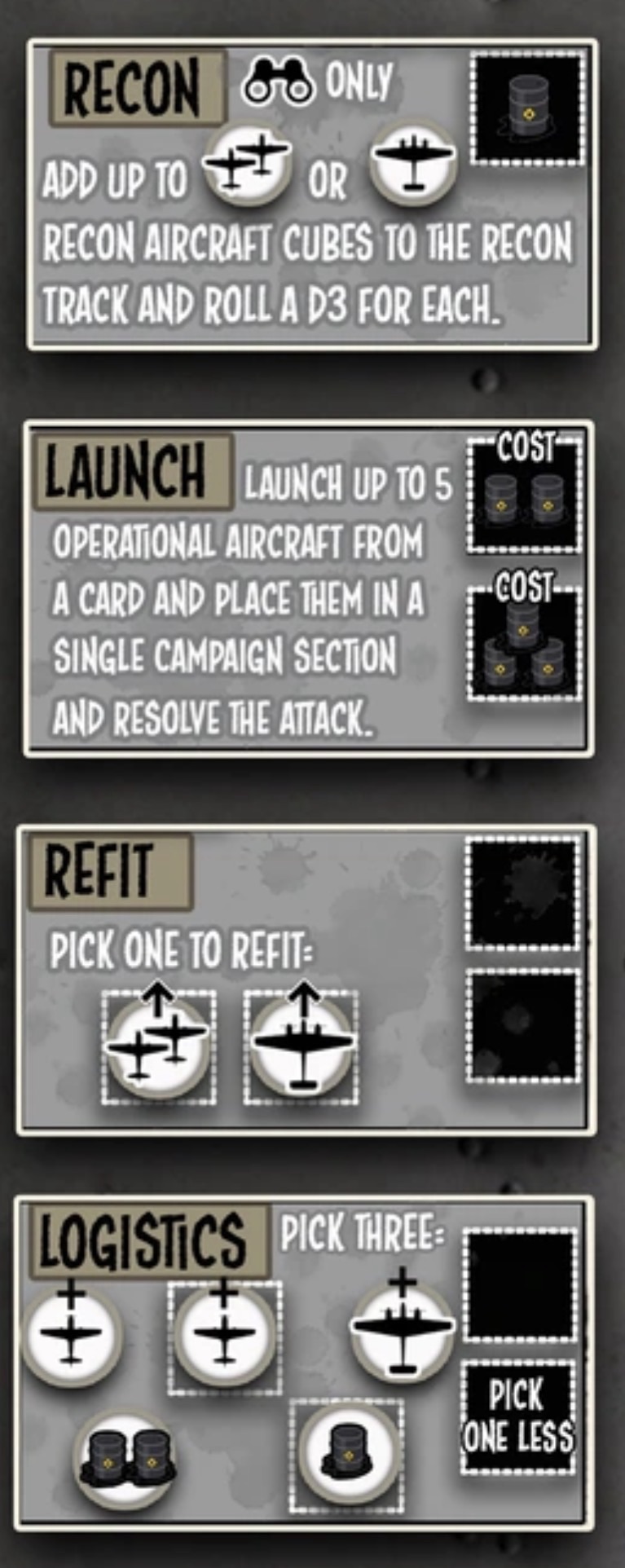
Martin: In the ‘Luftwaffe Phase’ each turn, you grab four Action Cubes (think of them as your orders). You place them one by one into any empty spot inside any of the Action Boxes at the bottom-right of the game sheet. There are only so many spots for certain actions, and some spots cost more Fuel or give you fewer choices than others. For example, the ‘Logistic’ action lets you pick three things, like getting a lost plane back or gaining fuel. However, using the same action a second time only lets you pick two things. I felt that making actions less effective if you used them too much would stop players from just using the same actions over and over.
Grant: How is the number of Action Cubes decided each round?
Martin: You always get four Action Cubes every ‘Luftwaffe Phase.’ Sometimes, things that happen in the campaign, your Commander’s special abilities, or upgrade cards can change the actions you can take in a turn, but mostly you will always get four Action Cubes per turn.
Grant: What different orders can the player give? How do they affect the game?
Martin: Orders, or Actions, are where you get to react to how the campaign is changing. Some actions need Fuel, and each action happens right away once you place it. The actions you can take are:
- Launch/Attack: Send planes from the ‘Operational Row’ of one Aircraft card to attack a Campaign Section. If you roll successfully, you remove enemy cubes, which can be placed on Mission goals if possible. After the attack, those groups of planes move to the ‘Refit Row.’
- Recon: Use planes that can do ‘Recon’ (looking around) to earn Recon points. These points can be used to re-roll dice, ignore ‘Saturation’ problems, get an extra action, or change missions and events.
- Refit: Moves groups of planes from the ‘Refit Row’ back to being ready to fly. Bigger planes get ready slower than smaller fighter planes.
- Logistics: Helps you manage your fuel and/or planes that have been lost.
Grant: How do you win the game?
Martin: At the end of the 12-turn campaign in Fliegerkorps, you simply add up your Victory Points (VPs) from finished Missions and any bonuses you earned for keeping the Campaign Dice under control. Then you compare that total to the Victory chart. Each campaign has its own required totals. The difference between a ‘Victory’ and a ‘Brilliant Victory’ is simply having a few extra VPs to upgrade your Fliegerkorps at the end of the campaign (and, of course, bragging rights).