The year is 1960. Well, actually it is 2025, but let us imagine we are in that era. Spies and secret agents are gathering intelligence on leaders, technology, and military plans. In the world of espionage, one small piece of information can change everything. This is the setting for Shadow Network, a game for 1 to 5 players from Talon Strikes Studios. Players take turns sending workers to locations around the globe to collect data. This data can be combined to build cases against important targets and gain influence. The game has a cool spy novel feel that draws you in.
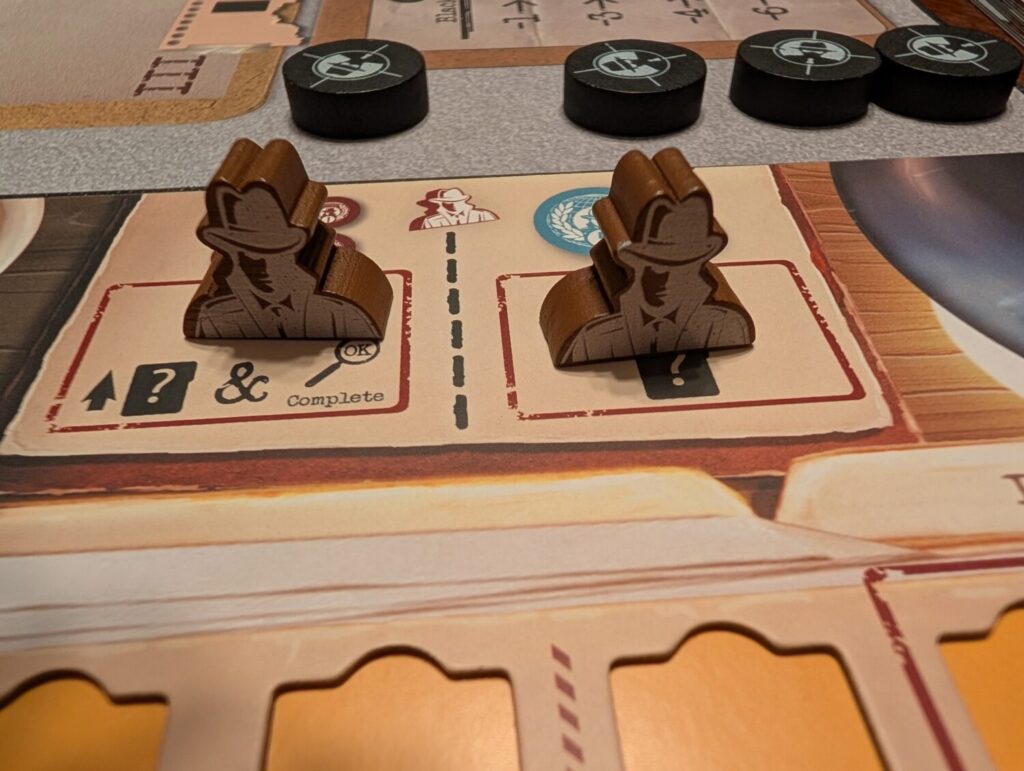
On your turn, you send one of your four agents to a location where you do not already have a worker. You have two on-call agents that must be used every round. You also have two optional agents that you can use or save for bonuses later. Your agents collect data at the spot where they are placed. Every time an agent moves to collect data, extra information leaks across the map. Each location has a card that shows what type of data it produces. When information leaks, the active player chooses other locations to place this leaked data. Later, when an agent visits that spot, they collect the normal data plus the leaked data. This creates tough choices because your favorite spot might lose value if opponents stack leaked data there. The four colors of data have different rarity levels.
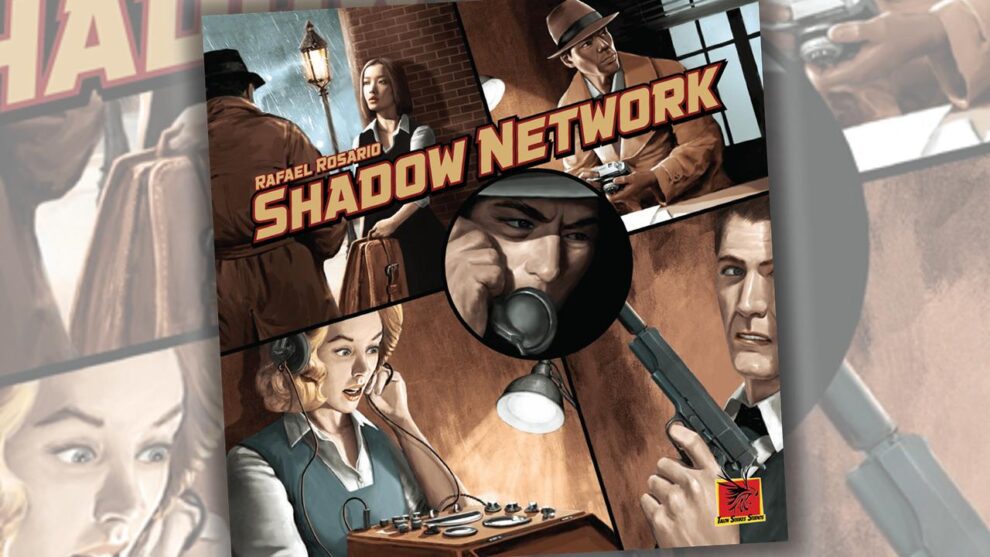
While playing, you use your collected data to finish contracts. Completing contracts earns you influence, which you can spend on the black market or to hire analysts. Analysts help you convert your data at a cheaper cost. The game lasts for four rounds. At the end, you gain influence for every completed contract and lose influence for any unfinished ones.
The Cover Story: Visuals and Style
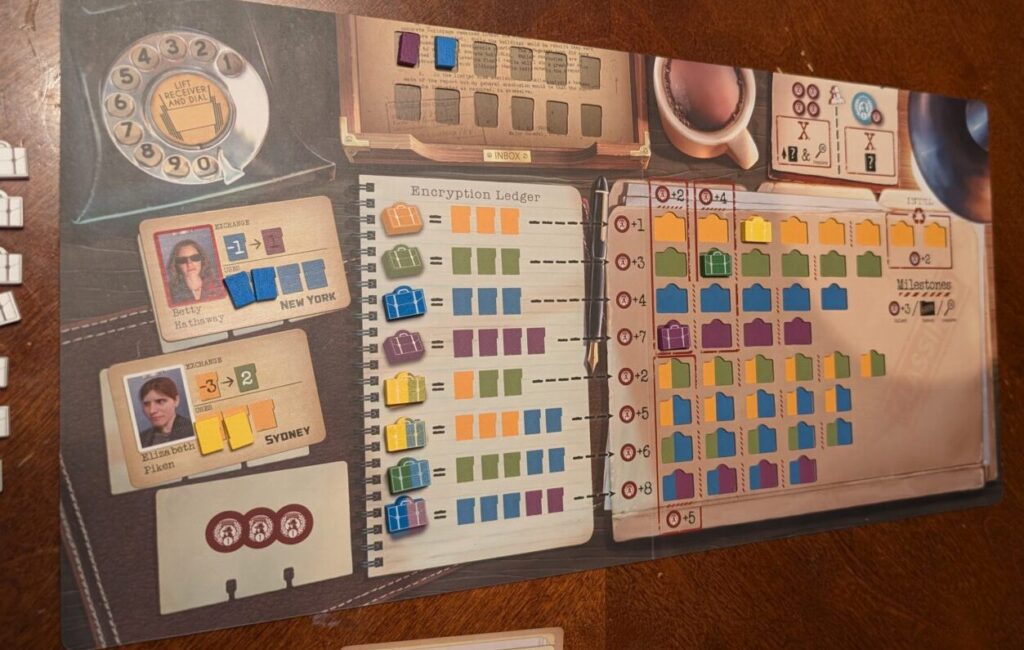
The game has a unique visual style that fits the 1960s Cold War theme. Designer Ralph Rosario focused on keeping this look consistent. The main board resembles an old corkboard with thumbtacks holding Polaroid photos at each location. The player boards have nice touches like a rotary phone and a coffee mug. The wooden tokens are heavy and colorful. However, the game uses both blue and green tokens, which can look too similar under certain lights. All the boards in the game are double-layered. This keeps the tokens in their slots and prevents them from moving around.
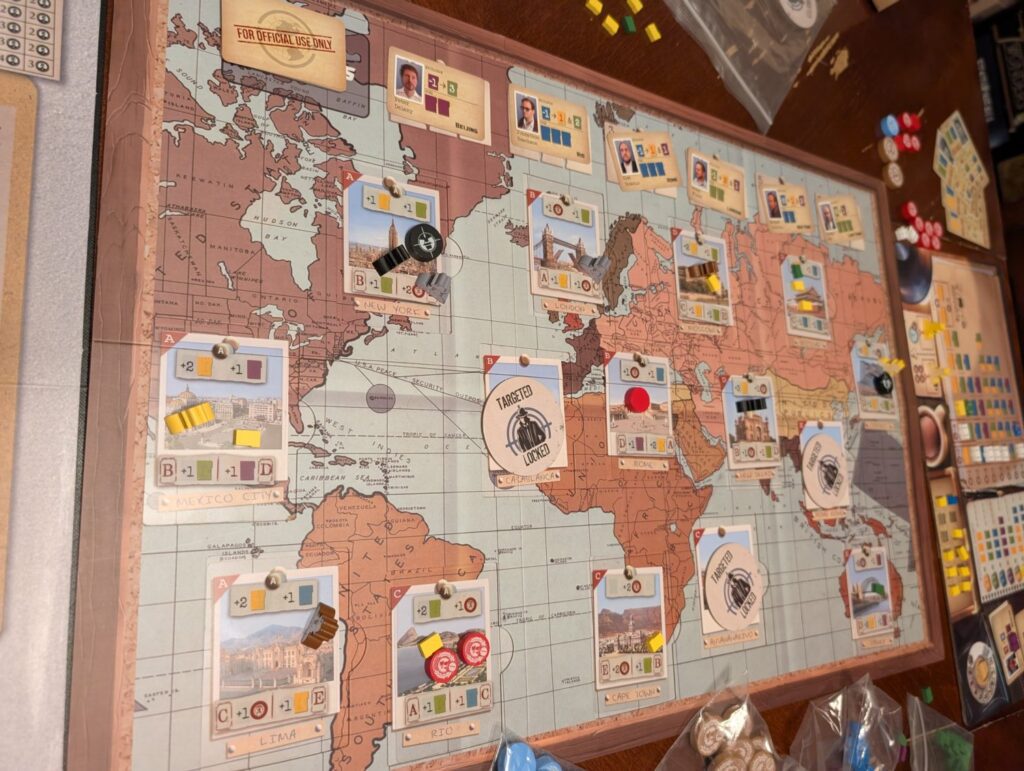
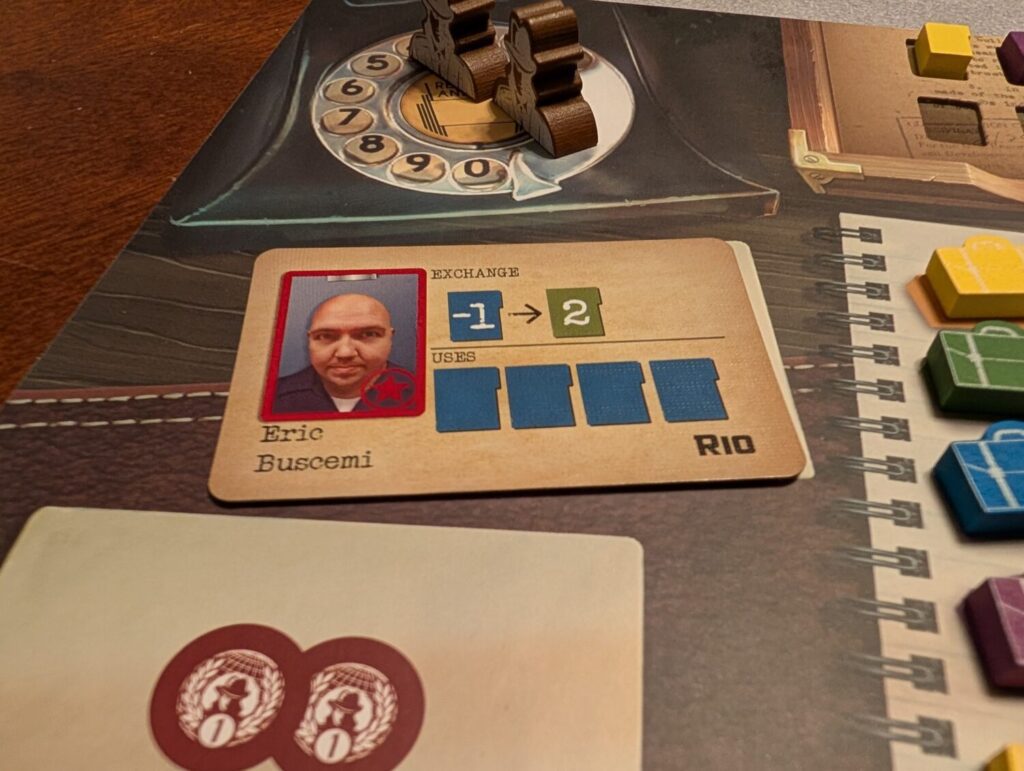
However, the presentation has some issues. The character photos for the handlers and contracts are repetitive. The same people are photographed from slightly different angles. This was likely a cost-saving choice, but it breaks the feeling of the theme. Another problem is the wooden intelligence tokens. They are not all the same size. This is probably a factory error, but if you are particular about details, it will bother you. Finally, the game has four types of intelligence, but at the table, we never remembered what each color meant. We just called them blue, green, yellow, and purple files. This made us feel less connected to the spy theme.
There are also areas where the game could trade theme for better function. The Secret Data cards are transparent overlays that fit into city locations on the map. They look cool, but using them is annoying. They stick together easily, and because they are clear, it is hard to tell which cards are missing. The Target Contracts include photos and short biographies of the targets. This information is not useful for gameplay. It just clutters up cards that are already slightly confusing to read.
Closing the File: Final Thoughts
After playing the game, we all walked away shrugging our shoulders. It has some cool components and an interesting theme, but the whole game does not feel greater than the sum of its parts. There are good ideas underneath the surface. There is very little downtime between turns because you are encouraged to do your exchanges and contract completions while others play. The transparent overlay cards change the board state, keeping each game fresh. The theme is great, and leaking intel to make spots more valuable is a nice idea.
I think the game missed the mark for me because the theme promises a lot. I love a good spy theme. I watched many James Bond movies as a kid and have seen every Mission: Impossible film. I even enjoy the show Slow Horses. I was ready to love a spy game. But here, the theme fades into the background as the mechanics take over. It never feels like you are doing real spying. It feels a bit like an accounting simulator. You spend most of your time converting one currency into another to track totals on a separate board. The parts do not click together well, which is a shame because it feels close to being something great.