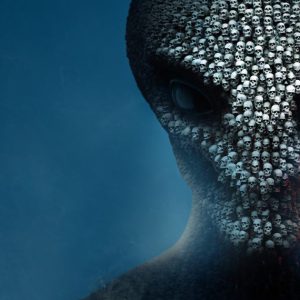
The idea of a fighting game based on League of Legends might have seemed strange a decade ago. It felt like a daydream, similar to imagining a Riot Games MMO or a trading card game. Yet, here we are with 2XKO, a game that defies expectations and delivers a high-quality experience, though it is not without its flaws.
2XKO is a free-to-play 2v2 tag fighting game developed by Riot Games, the creators of League of Legends and Valorant. It takes characters from the League universe and transforms them into fighters for online battles. You can even team up with a friend, adding a cooperative twist to the usual fighting game formula. If you have ever wanted to see your favorite character with more action and flair, this game offers that platform.
The game sits in the middle of the genre in terms of speed. It is faster than classics like Tekken or Street Fighter but not as chaotic as tag fighters like Marvel vs. Capcom or anime-style fighters. A lot of care went into the tag system, allowing players to switch between characters to perform impressive moves. It is packed with quality-of-life features, designed to appeal to both fighting game veterans and newcomers.
Fortunately, the focus on a smooth tag system pays off. Everything feels fluid and responsive. You can call in an assist with one character, charge a heavy attack with another, and tag into that assist just before the attack lands, and it all works seamlessly. At a basic level, it is an energetic change, but as you improve, these systems open up a world of possibilities. It is easy to learn but hard to master, which is the essence of a great fighting game.
Then there is the fuse system. This is a unique invention, but for comparison, it works like the Grooves in the Capcom vs. SNK series. These are team modifiers that change what your characters can do. This can include chaining super moves together, expanding your options when switching characters, or placing your second character in a supportive role.
However, there is one fuse that has been a point of contention: Juggernaut. This fuse removes the tag system entirely, replacing it with a single, buffed-up fighter with extra advantages to fight two-character teams. After playing for months, I see little use for Juggernaut, except as a concession for players who might be intimidated by tag mechanics.
It seems intended as a training tool, but it cuts players off from the core experience of 2XKO. It also appears to be a balancing nightmare: too strong, and it feels unfair to those using tag mechanics; too weak, and it feels helpless against even average players with a second character. If it were meant to be the main way to play, the game would not recommend the Double Down fuse as the default. I wish Juggernaut were removed entirely.
Especially since 2XKO has other accessibility options to help players embrace its complexity. You can turn on easy inputs, called Pulse Combos, during character selection, making the game easier for those unfamiliar with motion inputs. The damage difference between a Pulse Combo and a manual one is negligible for beginners. Another fuse, Sidekick, lets a player assist their partner from the sidelines, reducing damage and providing support. This is a clever way to let less confident players join in with a friend without feeling like a burden.
The game is also free, which is a major advantage. It is not the first free-to-play fighting game; Killer Instinct had a free version over a decade ago, and Brawlhalla remains a popular free platform fighter. Granblue Fantasy Versus also used a free character rotation. Still, 2XKO feels like the first time a live service model has been fully embraced. A rotating store of premium skins and a seasonal battle pass support what is, frankly, a fighting game at the same quality level as premium titles like Street Fighter 6 and Tekken 8.
The game is inherently complex. Even intermediate play is difficult due to the tag mechanics at its heart. A player using the 2X Assist fuse is playing a game focused on hitting you from unexpected angles. Those using Double Down will use one character’s super as cover for their second character’s offense. No matter how gentle the learning curve, you will quickly face the game’s depth.
This depth is wonderful, and any good fighting game needs plenty of it. It represents hundreds of hours of personal improvement. It is certainly what I play fighting games for, but I worry that certain characters or design choices may overwhelm newer players. Yasuo and Ekko, for example, are rich in skill expression and can be frustrating to fight against with their high-flying combos and mix-ups. I have seen Yasuo do things in 2XKO that made me laugh, while Ekko’s kit is full of powerful tools like his time-winder projectile or Chronostrike, making him a feast for those who enjoy the genre’s intricacies.

I believe the reason Yasuo and Ekko have remained strong throughout the game’s early access and launch is that 2XKO was built for characters like them. They were clearly designed by fighting game fans who wanted to create a game where the most intense gameplay is possible. These characters will remain strong unless completely crippled, because their strength lies in intentional design, not just damage numbers.
It is not just those two. Warwick has gained a reputation for ravaging online players with his speedy and relentless offense. There are multiple characters that are excellent zoners, designed to keep you at a distance with powerful projectiles, though all can turn ranged pressure into beautiful combos. Blitzcrank is for the grappler fans, a dirty robot able to snatch opponents from a distance and slam them for heavy damage. All of these characters were painted with a master’s brush, and all of them are nasty.
This is excellent news for those already in love with fighting games: training mode enthusiasts, frame-data experts, and patch note analysts. For the large portion of potential players 2XKO hopes to win over? I am not so sure. With all the effort put into making 2XKO tempting for fighting game newbies, it is clearly in essence a game for fanatics. The argument 2XKO is built around is this: you do not need to make a fighting game shallow or drain it of its complexity to attract new players. You only need to offer tools to help them engage with the daunting aspects. If millions play complicated games like League of Legends or Valorant, why not a fighting game like 2XKO?
Time will tell, but the 2XKO team has clearly gone all-in on this, forgoing the typical offerings of its contemporaries. There is no story mode, no arcade mode, and no casual alternative mode for a relaxing experience. There is no Street Fighter 6 World Tour counterpart, nor an ARAM equivalent that League of Legends players may know. If the direction is right, it could be a bridge between thousands of players and the unique bounty of fighting games. If Riot is wrong, 2XKO could be the most delicious rum and raisin ice cream ever made, trying to win over crowds of vanilla enjoyers. It is a game built around the joys of tag fighters. As someone who has tried and failed to get friends to play 2XKO, I remain unconvinced of this strategy.
What I will say is that for those who do stick around with 2XKO, they will find a game bolstered with quality in almost all areas. It is visually stunning, a fascinating divergence from the stylized fantasy of League of Legends. If the parent MOBA is a hand-drawn illustration, then 2XKO is a more rebellious, cell-shaded piece. An almost punky, vibrant game where characters erupt from excellently-crafted backgrounds and visual effects. I love that the team had the confidence to break out in its own direction, remaining faithful to the
I do wish there were more characters, and that is a running theme since 2XKO’s early access release. A launch cast of 12 is solid, there is no doubt. But given the tag nature of the game, you end up seeing a similar cast of fighters often, especially when the meta has clear winners already. The passing of time will resolve this, there is no doubt, and the fuse system does go a long way in remixing a team in interesting fashion, but nonetheless you can only see Warwick so many times before you tire of the dog.
The same is true for the music in 2XKO. The game has a blend of electronic and metal across the board which certainly helps set it apart from other fighting games. Guitars and electronics duel it out on the main menu screen, while character themes occasionally pop in during tense moments. Some of these are catchy, like Darius’ mean Metal anthem and Blitzcrank’s more dubstep-y tune. However, one of the quirks of 2XKO’s dynamic music system is that you are, sadly, unlikely to hear them much. I would very much love a BGM select option in the future.
The online netcode in 2XKO is exceptional. Very rarely did I encounter matches which I considered unplayable, or frustratingly laggy, a testament to the infrastructure Riot has provided. Given how good it is, I find it puzzling that no options for cross-region play are available for public matchmaking. I know for a fact that matches between the UK and US are of good quality, I played on an American account last year prior to the early access release and it was truly impressive. Given that you can play on different regional servers in other modern fighting games, it is a shame that 2XKO (with netcode likely far surpassing what is present in those titles) does not allow it. Perhaps a quirk with the 2v2 nature of the game, or a Riot server. A shame, nonetheless.
In terms of the game’s live service component, it is a rather fair one. You can earn all the new characters as they release if you play the game regularly, and you are given access to a healthy number of cosmetics by just playing the game, rather than having to fork out cash for nice skins. What skins you can buy are a bit pricey perhaps, but the bills must be paid and, to be honest, I am more than comfortable slapping down around £17 for a costume I fancy.
Plus, a dedicated skinline exists in 2XKO that contributes to real-world grassroots tournaments around the world. Riot Games’s willingness to send money to the game’s competitive scene through in-game microtransactions is a lovely touch that shows an eagerness to support the game’s most dedicated players, and makes busting out the wallet feel like supporting a good cause.
2XKO is undoubtedly a fantastic fighting game. It is clearly been created by a talented team head-over-heels with the genre, with a boundless understanding of what fighting game players want from a modern title. It is not perfect, nor the genre saviour eager beavers drooled about years ago, but for a studio’s first venture into a genre dominated by legacy franchises, it is a game that matches or surpasses those with bold new ideas. The question now is this: can 2XKO win over enough people to go the distance, and use its launch momentum to continue building a true live service fighting game? Or, will it wilt in the niche shadows? I hope for the former.