Game Name: The One Hundred Torii
Year It Came Out: 2020
Who Made It: Scott Caputo
Who Drew the Pictures: Vincent Dutrait
Who Puts It Out: Pencil First Games Way to Play Alone: Comes with the Main Game
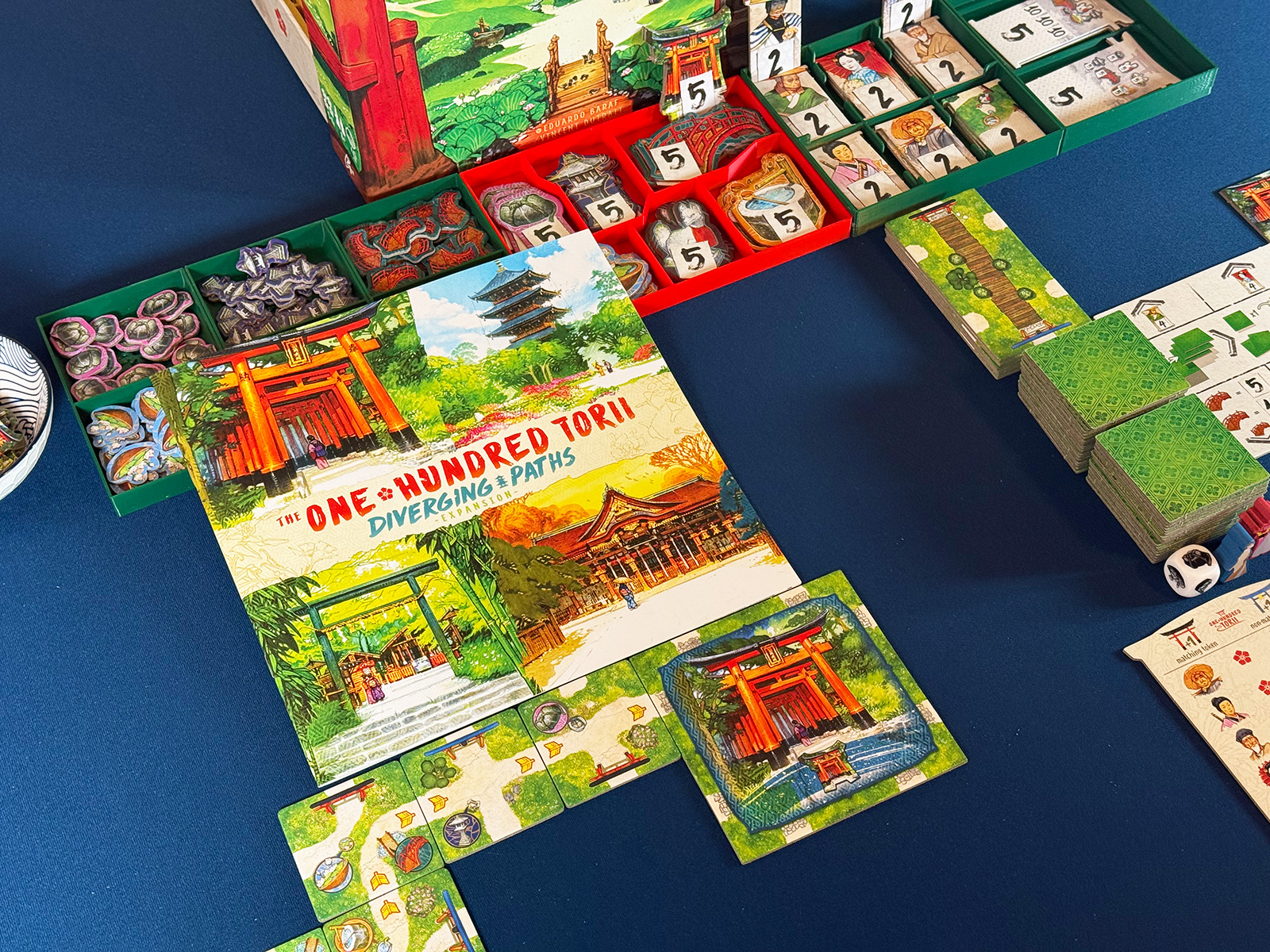
The game is about making paths and walking them in a Japanese garden, picking up tokens for the sights you see. This extra set makes shrines give different ways to play, and you can mix them up. You might meet new people too.
February 5, 2020
2
January 18, 2026
5
5 Minutes
24
30 Minutes
:
111
36″ x 22″
17
;
A Few New Characters
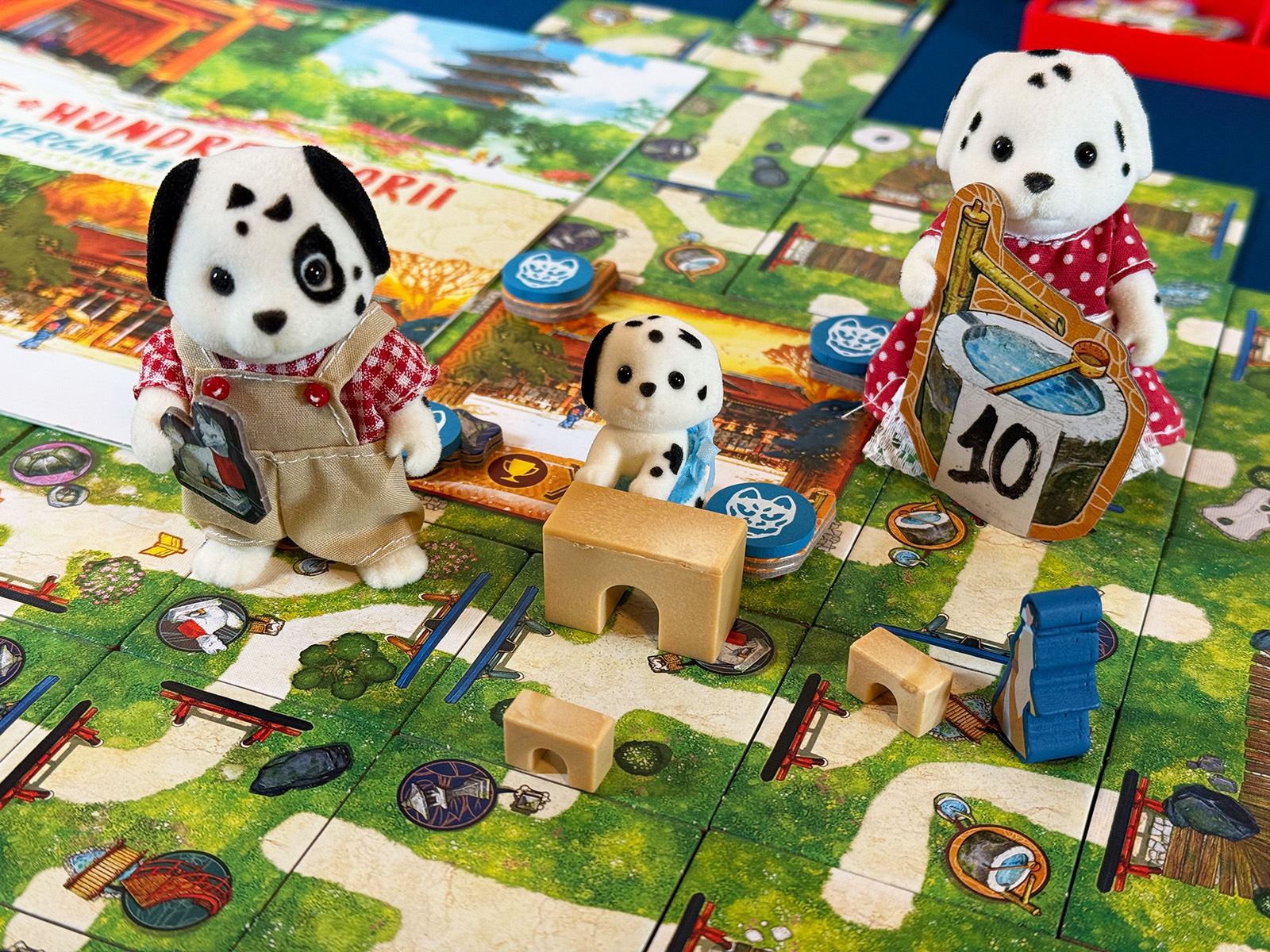
This extra content is full of surprises! In my last write-up, some Dalmatians joined the game. Now, all of them showed up.
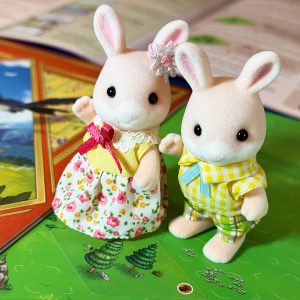
I have many small figures from my Calico Critters set, but I did not have tiny Torii gates. These are what I used instead.
They work okay. I was excited to learn the new rules, which let you add parts one by one as you like.
The gambler and pilgrim people play by themselves, and the four shrines give many choices. I chose to try each shrine alone first to understand how it works.
Fushimi Inari Shrine
This shrine has a simple way to use wild tokens, so it is good to start with.
Remember, when you use one shrine at a time, beating Onatsu gets easier at first. That happened here. I played boldly, and it worked well.
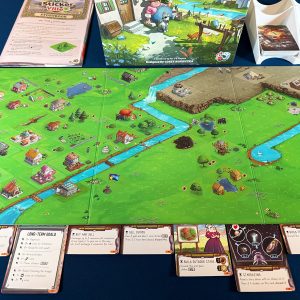
Shrines give points for paths around them. Now, going straight in one way is not best; you want to circle the sides.
Look at the pilgrim’s bridge pieces too. They help score points and look nice. Very beautiful!
New Onatsu Tiles
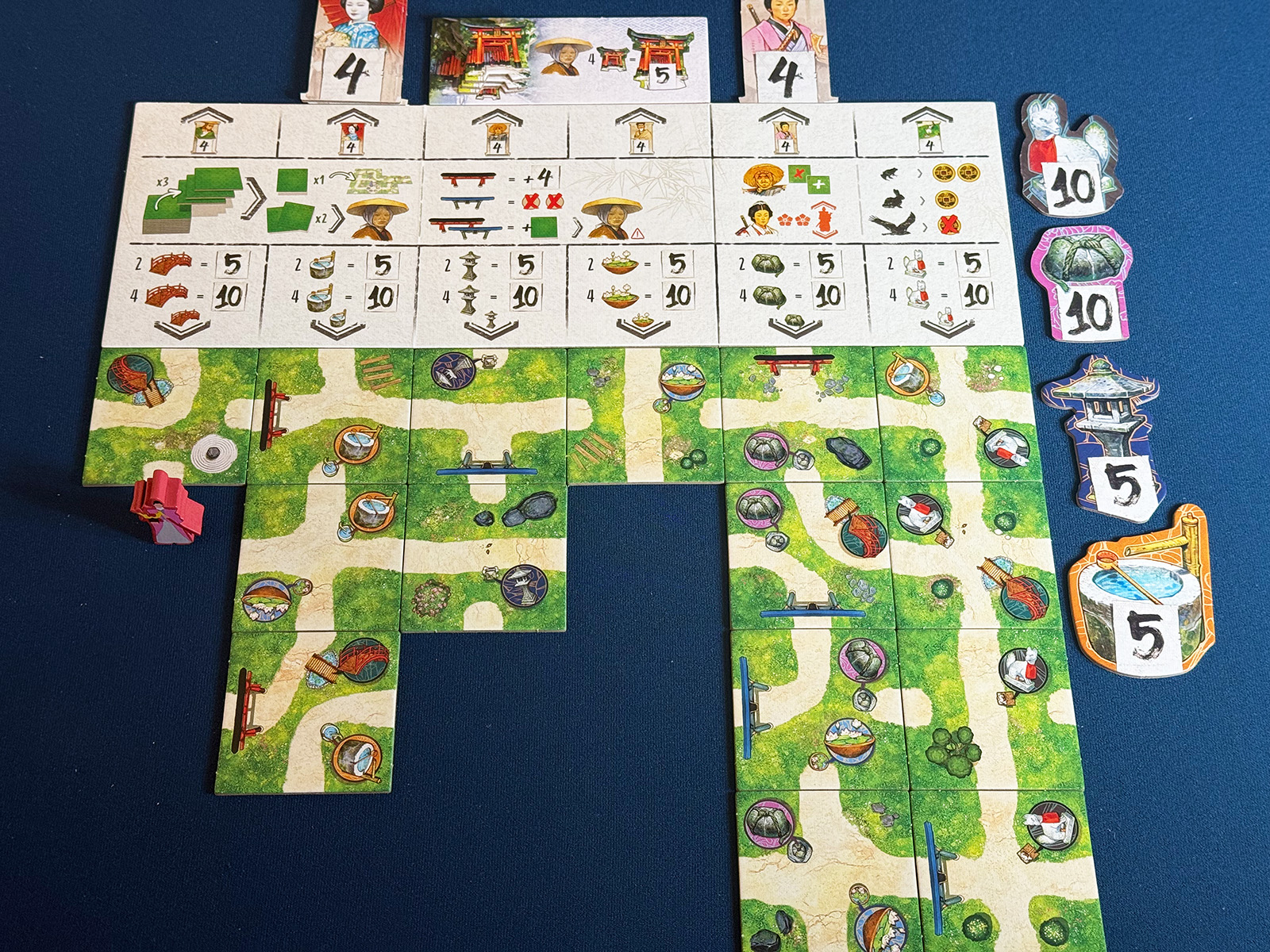
Each shrine brings new rules to learn, but the part for playing alone is easy. A tile sits over two rows on Onatsu’s board and gives her a power.
Here, with the Fushimi Inari shrine, tiles in the lantern or lotus rows gave her a small token. For her extra, she needed only four for a big token.
I felt smart and gave her just three tiles in those rows, so she got no points.
The samurai helped a lot too, and I enjoyed figuring out how to use all seven people best.
Nonomiya Shrine
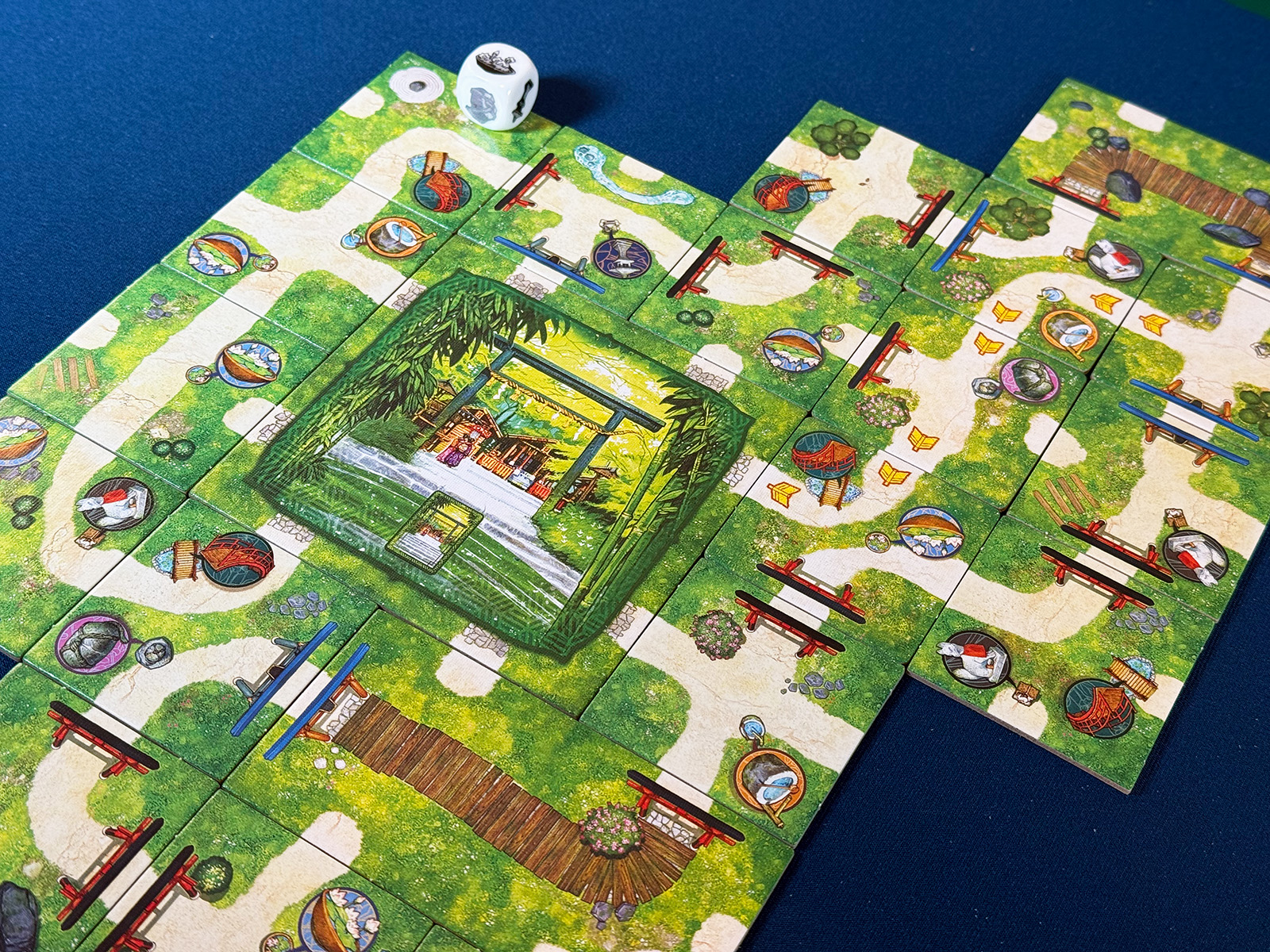
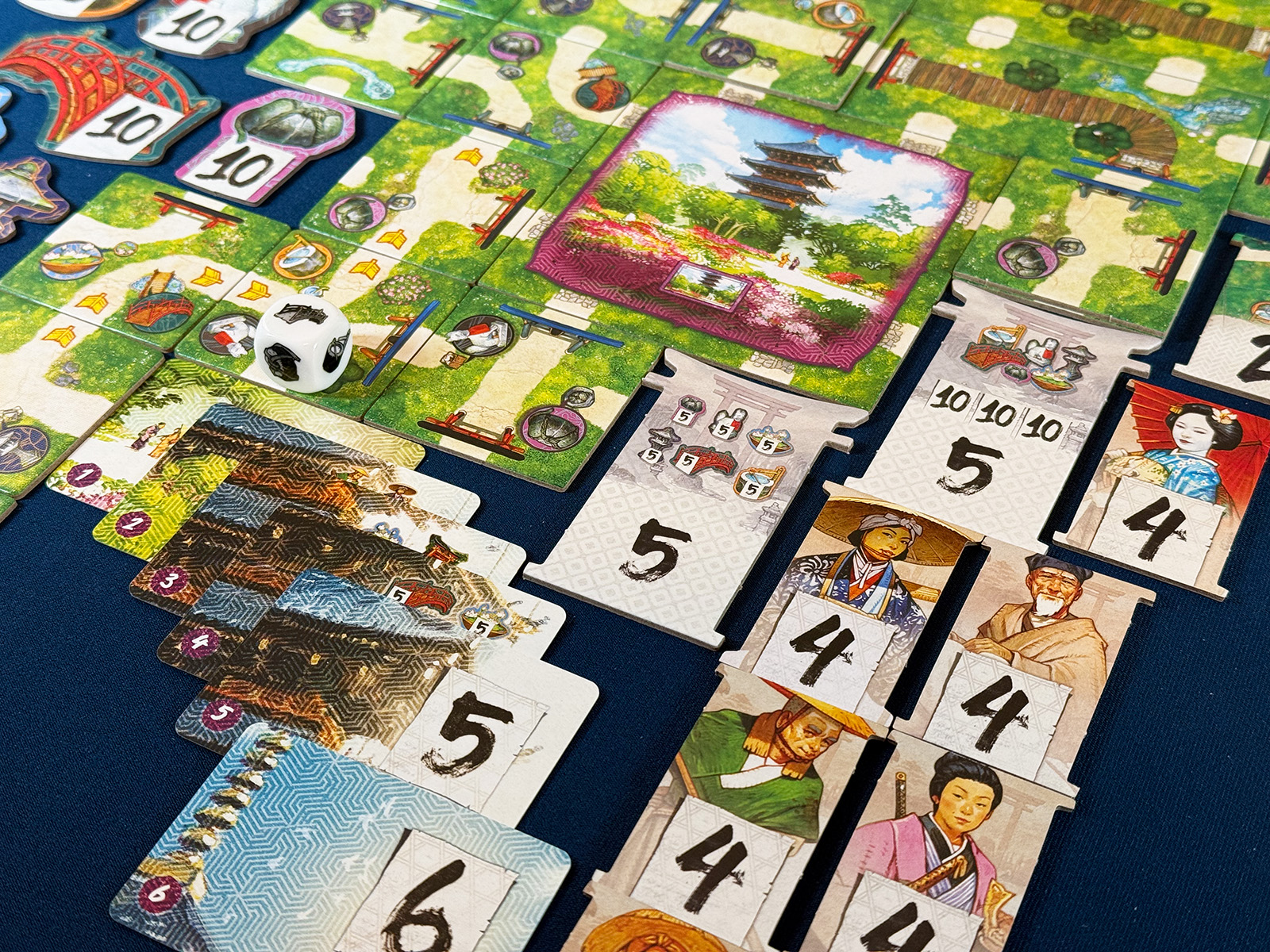
For the next harder level, I went to the Nonomiya shrine. It uses a pile of cards with special tasks for more points. Lots of green colors!
This gave me new ways to score and made me think more about Onatsu’s people tiles.
But it added extra work for me. With paths all around the shrine, I took enough cards to use up the pile, so I had to look through many each turn.
Finishing the tasks fit sometimes, but other times it went against my other plans. Not my favorite.
Enjoying Modular, Mix-and-Match Expansions
Extra game parts can do many things, and it is hard to group them all. But here, calling these people and shrines modular or mix-and-match fits well. Yes, there are many picks for what to add, and they work alone or mixed in different ways.
The new gambler and pilgrim people open new chances. In the main game, you can hire each person twice by the end. But now, that is harder in most games. More rules to follow! I say that nicely: Doing whatever you want can get dull without a real test.
The four shrines add even more choices than the people. One shrine alone gives four ways to play, each with good plans. For solo play, you can use two or three shrines together to make it harder against Onatsu. I like this kind of extra content because I can find what I like best.
To-Ji Temple Shrine
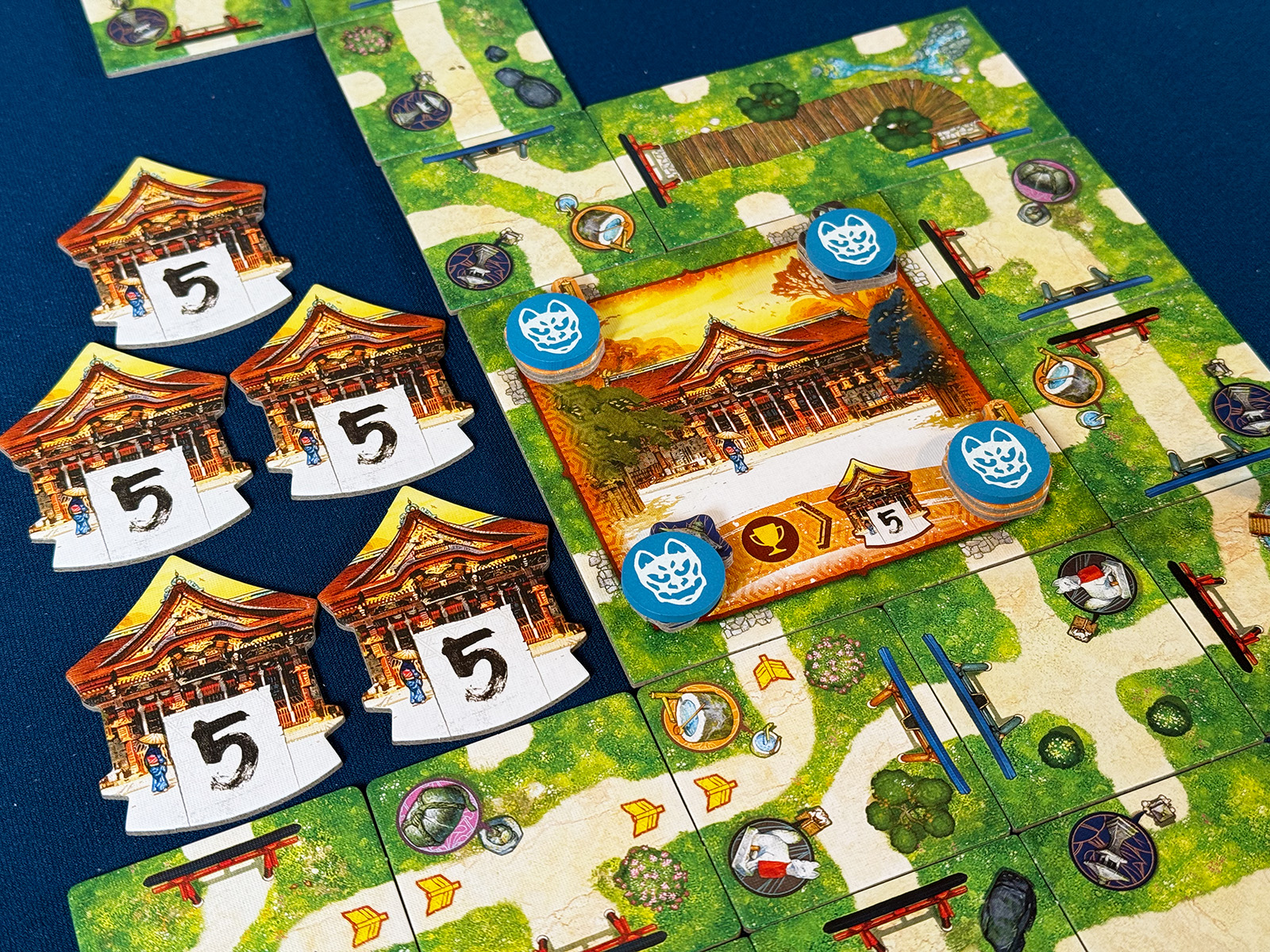
Even though I was not sure about the cards in Nonomiya, I had much more fun with the To-Ji Temple shrine.
In solo play, one stack of cards is used. You get them in order from low to high. Low ones give powers, high ones give points.
But using powers means giving back all cards, and there is a way to keep cards from Onatsu. She gets one, and that is all.
There was more to plan, but I enjoyed adding this shrine. It might be my top one, until the next.
Kitano Shrine
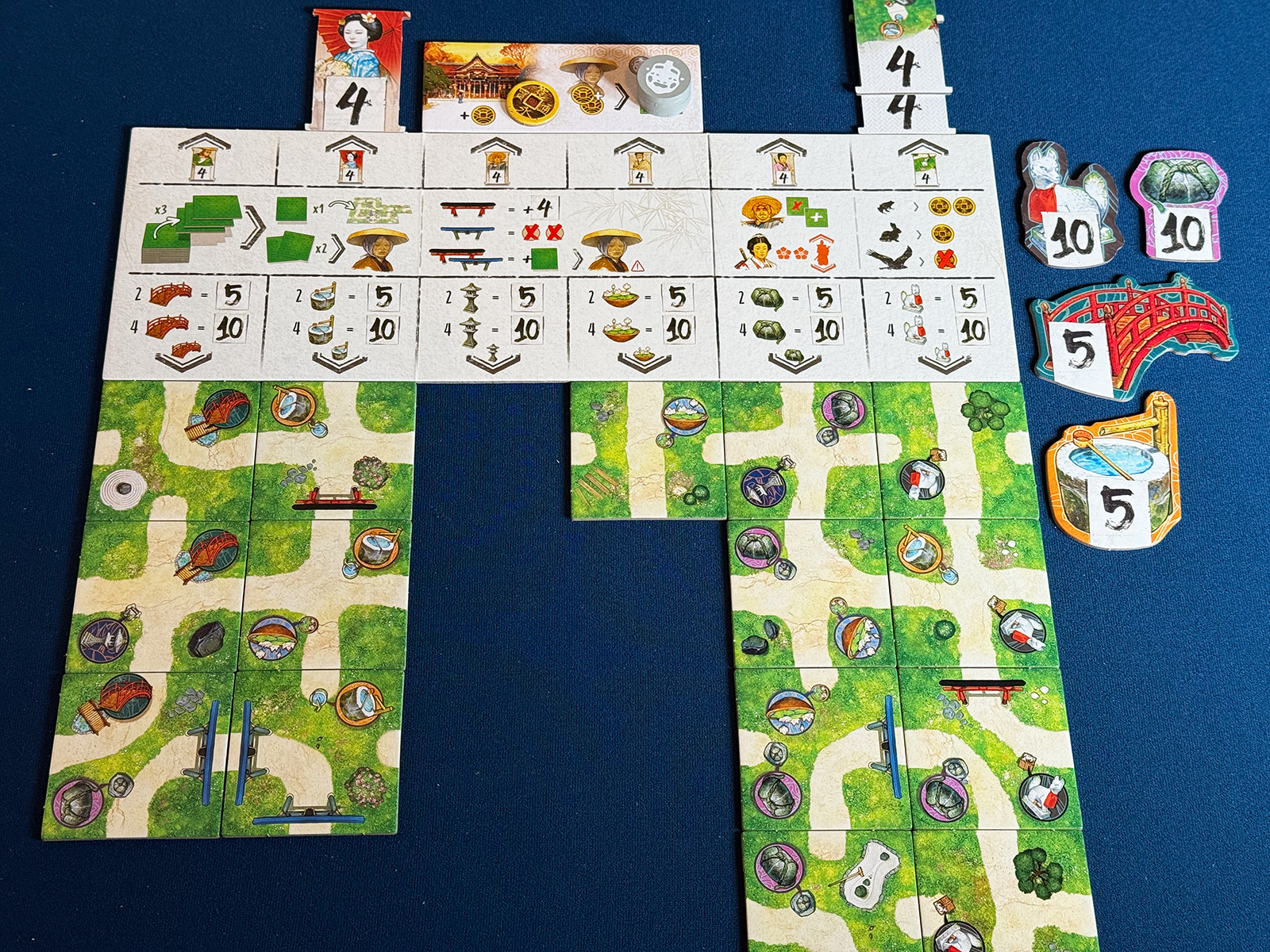
Now, the Kitano shrine! It is the hardest and trickiest for solo play, but it is not too bad. Just a new way to think about strategy.
Each side of the shrine takes gifts, shown by small tokens in a pile. To take a side someone else has, you add a bigger gift. Like controlling areas!
Not quite, but those sides give good points at the end. I played a few times against Onatsu. Hard to handle!
This changes how you play a lot, but it was my favorite. And yay for these great Kitano tokens!
Session Overview
Number of Plays: 19-24
Extra Set: The One Hundred Torii: Diverging Paths
Solo Way: Comes with the Main Game
How I Played: Easy, Medium, and Hard Levels
What Happened: 4 Wins and 2 Losses
Take that, Onatsu! I needed a few tries with some shrines to win, but I did it. The last game was great because I stopped Onatsu from getting much. That score matched her worst ever. Enemy beaten! But I am not finished; I want to try mixed shrines and small extras.
+ Pros (Positives)
- Every shrine has its own special ways, so you can pick favorites among the new plans.
- Handling the solo foe uses few rules, but picking which tiles to let go takes careful thought.
- The big shrine pieces fit the game well and make it look pretty too.
- Seeing the paths is easy on the eyes with good colors against the green.
- New people give more choices, and the pilgrim’s bridges bring smart picks.
– Cons (Negatives)
- Keeping track of the point rules on Nonomiya cards can feel slow sometimes.
- Spotting the different signs can be hard in busy spots with many tiles nearby.
- Onatsu can be easy to beat with some shrines, but using more than one helps fix that.
- Getting extra small tokens after the 10-point big one can make a useless stack.