Iraq is emerging as the Middle East’s strategic connector – but can it turn foreign competition into advantage?
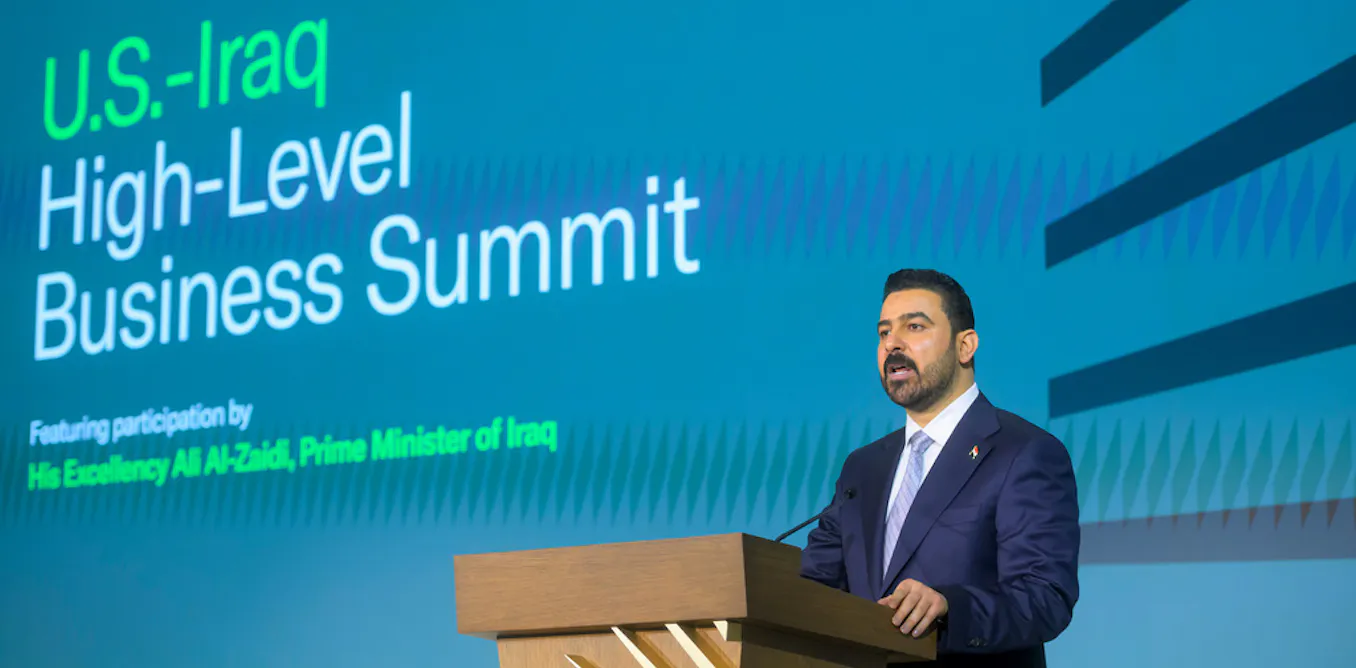
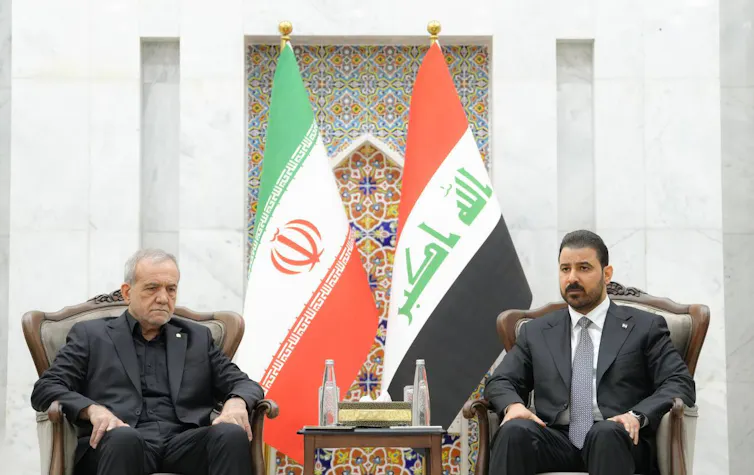
Iraqi Prime Minister Ali al-Zaidi is on something of a diplomatic roll at the moment. Having concluded a weeklong visit to the United States on July 19, 2026, during which he charmed President Donald Trump, al-Zaidi is now expected to head to Tehran to do the same with Iran’s new leaders. Trips to Qatar, Saudi Arabia, Turkey and Syria all figure on his itinerary, too.
The U.S. visit was the first – and arguably most important – stop on a broader effort to give domestic legitimacy to al-Zaidi’s government and attract foreign investment while elevating Iraq’s status in the Middle East.
Alongside seeking closer ties with Washington, Baghdad hopes to maintain its longstanding relationship with Tehran amid a renewed U.S.-Iran confrontation and the economic shock caused by disruptions in the Strait of Hormuz. Becoming a bridge between the two countries – and a possible host to Iran-U.S. negotiations – will help establish Iraq in the delicate position.
But it is also telling that the U.S. visit – which included a high-level business summit and meetings with American energy executives in Houston – was carefully orchestrated with an eye towards a new U.S. regional strategy focused on trade and investment in the Middle East, with Iraq as a key component. As a close observer on Middle East geopolitics, I believe it all points toward Iraq’s emergence as a strategic connector in a Middle East increasingly shaped by energy, infrastructure trade and investment networks.
Iraq’s value to competing countries
Iraq’s growing importance as a potential nexus for diplomacy and commerce reflects both domestic changes and broader regional shifts. The massive degrading of the Islamic State group in Iraq and across the region, improvements in security and Baghdad’s more active diplomacy have expanded Iraq’s room for maneuver.
At the same time, the fall of the Tehran-aligned Assad regime in Syria, the weakening of Iran’s proxies in the region and the U.S.-Iran war have heightened the strategic value of Iraq’s geography, institutions and relationships. In short, as the regional balance has been reshaped and Iran’s traditional network of influence disrupted, Iraq has become an increasingly important platform for military coordination, regional diplomacy and economic connectivity.
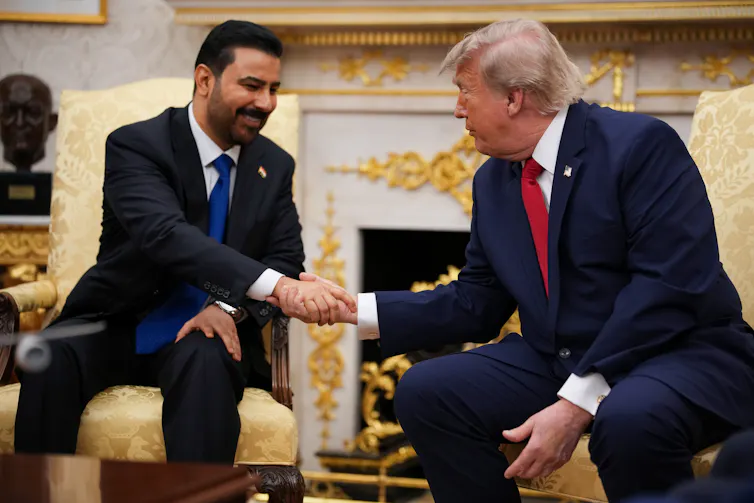
Amid those changes, al-Zaidi’s U.S. visit underscores that Washington is reassessing Iraq’s role at a time when nearly every major regional actor is doing the same. Iran, the Arab Gulf states and China have each deepened their engagement with Baghdad, pursuing different objectives yet recognizing that Iraq occupies a position of unusual strategic importance.
For Washington, the reassessment reflects a shift away from the post-Iraq War view of Baghdad primarily through the lens of counterterrorism and military stabilization. Instead, U.S. officials and Iraqi counterparts increasingly see a broader partnership. New economic deals signal an effort to strengthen Iraq’s energy sector, modernize infrastructure and expand private-sector investment.
Security cooperation remains important, but it now complements a broader strategy aimed at building a more resilient Iraqi state capable of managing competing external pressures and governance in general.
Beyond the US role
For Tehran, Iraq is central to its regional strategy at a moment when Iran faces a more challenging environment elsewhere. Iraq provides a strategic buffer, extensive commercial ties and a critical corridor connecting Iran to partners across the Levant. As Tehran’s broader regional allies such as Hezbollah and Yemen’s Houthis come under pressure, preserving its position in Iraq has become even more important.
The Arab Gulf states have similarly recalibrated their approach. While security concerns – particularly Iraq’s relationship with Iran – continue to shape their policies, Saudi Arabia, the United Arab Emirates and other Gulf kingdoms view Baghdad’s post-Islamic State group trajectory as an opportunity for engagement through investment, infrastructure and economic integration.
A more stable and connected Iraq can link Gulf markets, capital and infrastructure initiatives with global trade and investment while reducing the risks associated with instability emanating from Iran.
China’s role illustrates another dimension of Iraq’s importance. As Baghdad becomes an increasingly important arena for geopolitical and commercial competition, Chinese companies will need to compete more aggressively for contracts, and Beijing will face greater incentives to deepen its engagement in Iraq to preserve its influence.
Yet China’s interests are not limited to securing access or outcompeting rivals; a stable, economically viable Iraq is itself valuable to Beijing as a reliable energy partner and a potential hub for broader regional connectivity. In this respect, quite apart from great-power competition, U.S. and Chinese interests are broadly compatible.
These various developing relationships with Iraq do not represent a simple competition among rival countries or blocs. Instead, they coexist, reflecting Baghdad’s effort to diversify external relationships while avoiding excessive dependence on any single power.
An emerging strategic connector
What distinguishes Iraq is not simply its geography but the unusual overlap of relationships that few other Middle Eastern states possess. Baghdad can engage Washington on security and energy, Tehran on political and commercial ties, Beijing on infrastructure and trade and the Gulf states on investment and regional connectivity.
This gives Iraq the characteristics of what I am calling an “intermediary state” – a country whose influence derives from its ability to remain connected to competing political, economic and security networks while helping shape how those networks interact.
Iraq therefore offers a glimpse of a broader transformation in Middle Eastern geopolitics. Military power and traditional alliances remain central but influence increasingly flows through the systems that connect economies and societies: energy infrastructure, electricity networks, logistics corridors, financial systems and investment relationships.
States that shape these networks will have greater ability to influence the region’s future.
The vulnerability in Iraq’s approach
The challenge is whether Iraq can convert this connectivity into national advantage without allowing external competition to overwhelm government decision-making.
The same relationships that increase Baghdad’s value also create incentives for outside actors to compete within its political system. Connectivity can provide leverage, but without stronger institutions it can also deepen dependence.
The most immediate challenge is consolidating state authority. Al-Zaidi’s effort to bring non-state armed groups under government control will test whether powerful Iran-aligned militias in Iraq will relinquish the autonomy, political influence and economic interests they have accumulated over two decades. Progress toward disarmament is likely to prove uneven, particularly if regional tensions again increase the perceived value of these groups to Tehran.
Iraq’s domestic political economy presents an equally formidable obstacle. Patronage networks, corruption and fragmented governance continue to limit Baghdad’s ability to implement nationwide reforms, attract sustained investment and translate external partnerships into broad-based economic development. Converting strategic importance into lasting national strength ultimately depends as much on institutional capacity as foreign relationships.
External dynamics will also remain consequential. Persistent distrust between Washington and Tehran ensures that Iraq will continue to face pressure from competing powers seeking to shape its political trajectory. Distrust alone would be the least of Iraq’s concerns. Were the current escalation in U.S.-Iran hostilities to spiral into a protracted, wider regional war, both Iraq’s prospects of realizing this potential and the al-Zaidi government’s survival would be at risk.
Whatever transpires on that front, China is unlikely to retreat from a market where it has become a leading trading partner and major infrastructure investor. The Arab Gulf states will continue seeking a more stable and economically integrated Iraq. And Washington will still want a partner capable of resisting destabilizing pressures, not to mention helping to counterbalance China.
The challenge for Baghdad will be managing these overlapping relationships while ensuring that foreign partnerships strengthen rather than constrain Iraqi sovereignty.