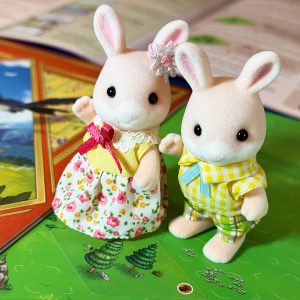
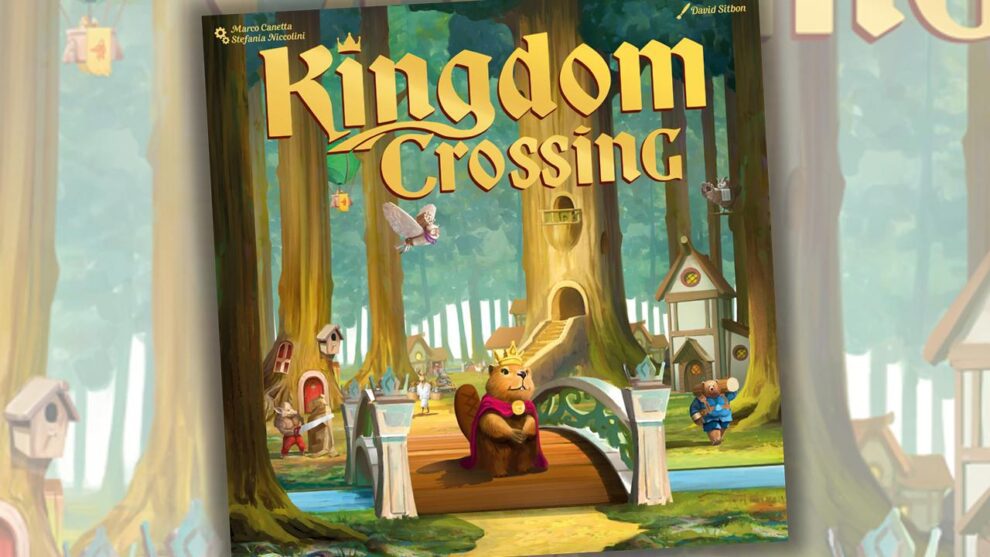
When the team at Sorry We Are French releases a new title, I always pay attention. They have earned a reputation for quality, and their latest release, Kingdom Crossing, caught my eye immediately. I had the chance to pick up a copy during a meeting at SPIEL Essen 2025. The cover art looked cute and almost cuddly, but I quickly learned that looks can be deceiving. This game is charming, but it is certainly not a light, fluffy experience.
The designers behind Kingdom Crossing are Marco Canetta and Stefania Niccolini. These are the same talented people who created the original Zhanguo as well as the new edition for Sorry We Are French. Zhanguo: The First Empire is known as a very heavy strategy game. Because of their history, I expected Kingdom Crossing to be a slow, thinky game with long periods of downtime between turns. I was wrong.
Seven Bridges Aren’t Enough
Kingdom Crossing is a game focused on collecting sets of cards using action tiles. It includes the standard elements you would expect from a Euro-style game, such as tracks to advance on, public goals, and individual scoring tiles. It is designed for 1 to 4 players. My sessions took about 20 minutes per player. A solo game finishes in under 30 minutes, and even with four players, the game usually wraps up between 80 and 90 minutes.
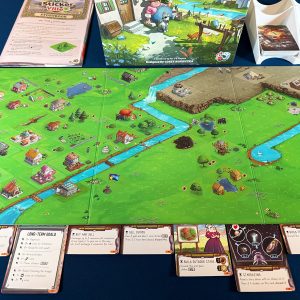
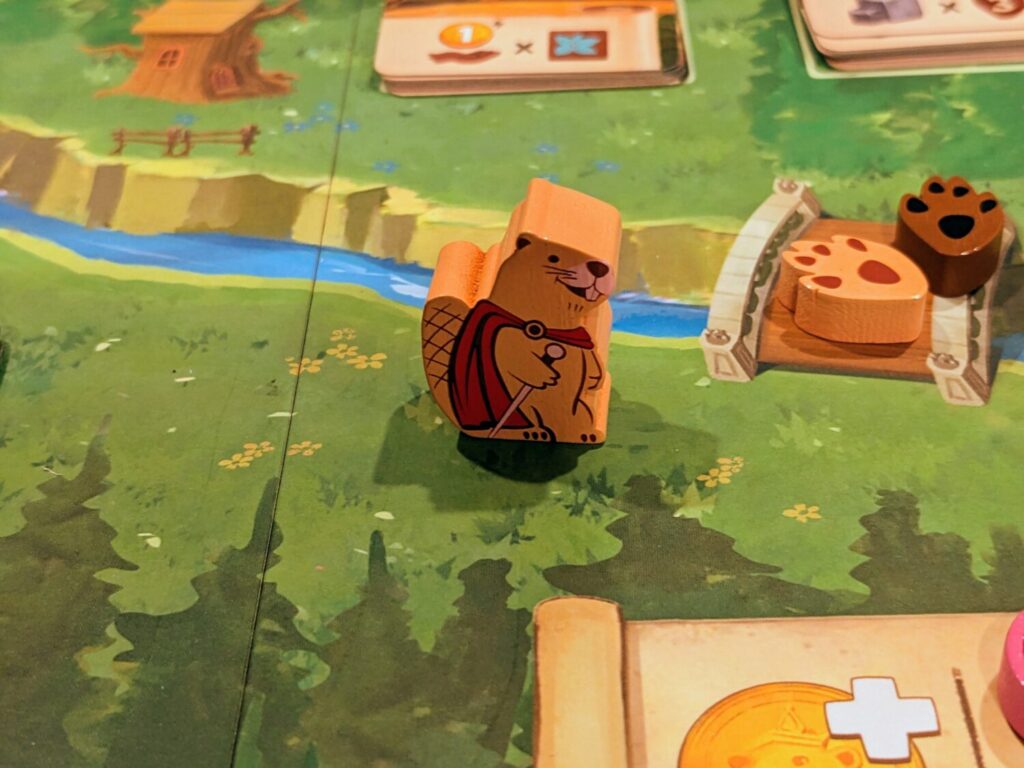
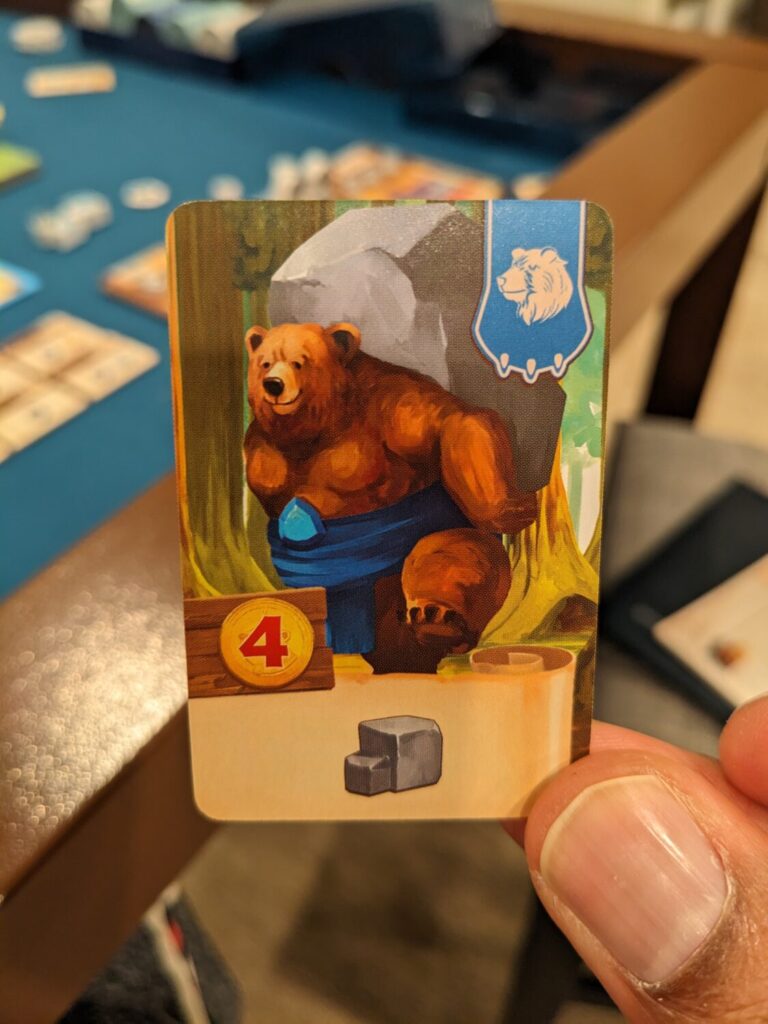
The game takes place over four rounds. In each round, players get four turns to move their worker pawn across a map featuring four islands and seven bridges. Every time a player finishes moving, they must choose a card from the two or three face-up cards available in their current location. These cards offer chances to boost resources or help with scoring at the end of the game. Alternatively, players can select income buildings called Structures. These trigger benefits immediately when chosen and again at the start of the next round.
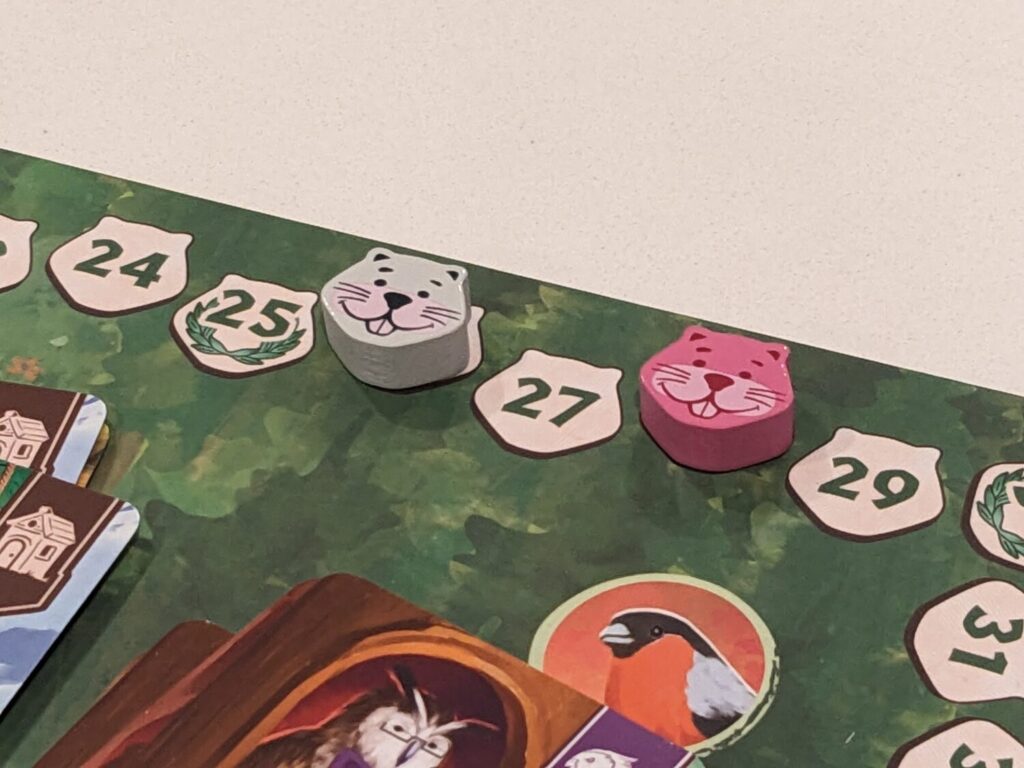
Every non-Structure card belongs to one of five suits in the game. If you manage to collect cards in pairs of the same suit, you earn extra bonuses during the income phase of each new round. Movement is controlled by a hand of six action tiles. During a round, you will play four of these tiles to move around the map or to rest. Resting allows you to gain coin income from that tile, giving you more money to spend on future turns. As you move, you leave small paw tokens on the bridges you cross. Points are awarded to players who cross at least six bridges in a round, with even more points for crossing all seven.
Turns in Kingdom Crossing are very snappy. You play a tile, move your worker, grab a card, and trigger its immediate bonus. Because it is important to collect cards from all five suits, hunting for the right cards makes every turn interesting. There are 10 different decks showing various face-up cards, so it is always an adventure to find exactly what you need.
The bonuses on the cards are subtly different. There is a nice balance between free cards that earn you cash, resources that boost one of the four tracks on your player mat, and income that helps you avoid taking rest actions. This creates a tactical play style that I really enjoyed, even though the card market changes on every turn.
Kingdom Crossing mixes fast turns with a mix of in-game and end-game scoring that is simple to calculate. Much like my love for the Galileo Project, Kingdom Crossing uses its time at the table efficiently. The production is mostly solid. The artwork, done by SWAF’s in-house illustrator David Sitbon, brings the animal characters to life in fun ways. The worker, house, paw, and medallion tokens do their job well, and the graphic design makes everything easy to understand after just a few turns.
Mostly a Winner
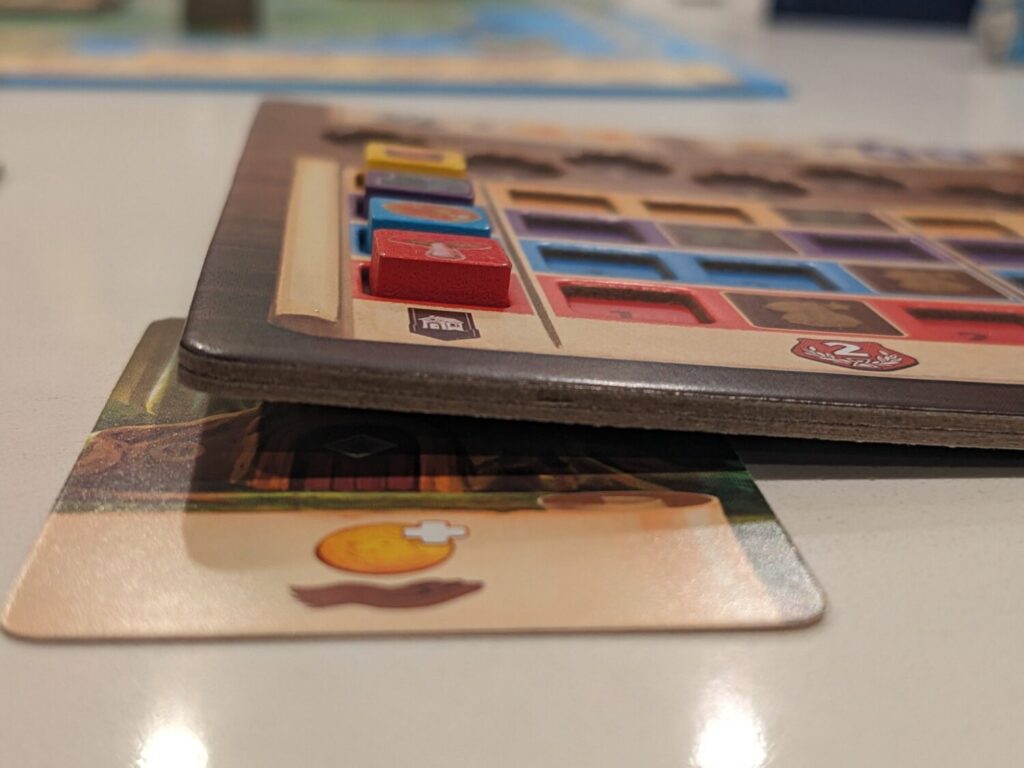
The only physical failing of Kingdom Crossing is the included player boards. After just half of my first three-player game, the boards were so warped that I didn’t even have to lift them to slot cards at either end. Combined with the tiny re
The game also includes cardboard money tokens. While I don’t blame the publisher for this choice, I immediately reached for poker chips. I missed the high-quality “Megacredit” poker chips that SWAF included in products like Galileo Project; those are nowhere to be found in the Kingdom Crossing box.
As a design, I really enjoyed Kingdom Crossing. I am impressed that the same people who made Zhanguo created a game so different. Puzzling out the movement each turn while also getting the right cards to drive your income engine creates a satisfying decision space right from the start. The solo mode is easy to administer, making it a decent solo experience. However, I recommend playing this at its highest player count first, as the card market movement forces much harder choices when the competition is fierce.
Kingdom Crossing shows off the range of designers who are passionate about diversifying their portfolio. Zhanguo: The First Empire had many highs, but it has proven to be a very hard game to get to the table. Canetta and Niccolini’s work here will fit well with core gamers, children (ages 9 and 11), and casual players looking for an easy-to-teach, non-confrontational race for points.
The only other minor downside for me is replayability. I really enjoyed Kingdom Crossing, but I am not exactly itching to play it again beyond my review sessions. The game hasn’t held the attention of my “game brain” now that I’ve finished those plays, and I am not really sure why. Kingdom Crossing never sank its teeth into me the way SWAF games such as Galileo Project and Shackleton Base have. Those latter two titles are never leaving my collection. Multiple friends own IKI and its expansion, IKI: Akebono, and most of us think IKI is fantastic.
Kingdom Crossing is fun, but I think its shelf life is a bit more limited, at least for me and my groups’ collective tastes. However, if these mechanics get you excited, run out and grab a copy of Kingdom Crossing immediately!