Walk slowly along the quiet, winding paths of a Japanese garden to enjoy the journey offered by The One Hundred Torii.
With my games finally organized and sitting on the shelves, there are many adventures waiting to be chosen. I often pick whatever catches my eye at the moment. This past weekend, the choice was The One Hundred Torii. It had been a while since I last played, but the solo opponent, Onatsu, remains my familiar rival. It was time to return to the garden for another showdown.
Personal Connection
I currently work for the publisher, but I bought this game and its expansions myself. Everything written here is my own opinion, and I have a simple reason for bringing this game to my table. For full transparency, I do have a connection to the game and was involved in a very small part of the final rulebook editing and development.
Game Overview
Game Name: The One Hundred Torii
Publication Year: 2020
Designer: Scott Caputo
Artist: Vincent Dutrait
Publisher: Pencil First Games
Solo Mode: Included in the Base Game
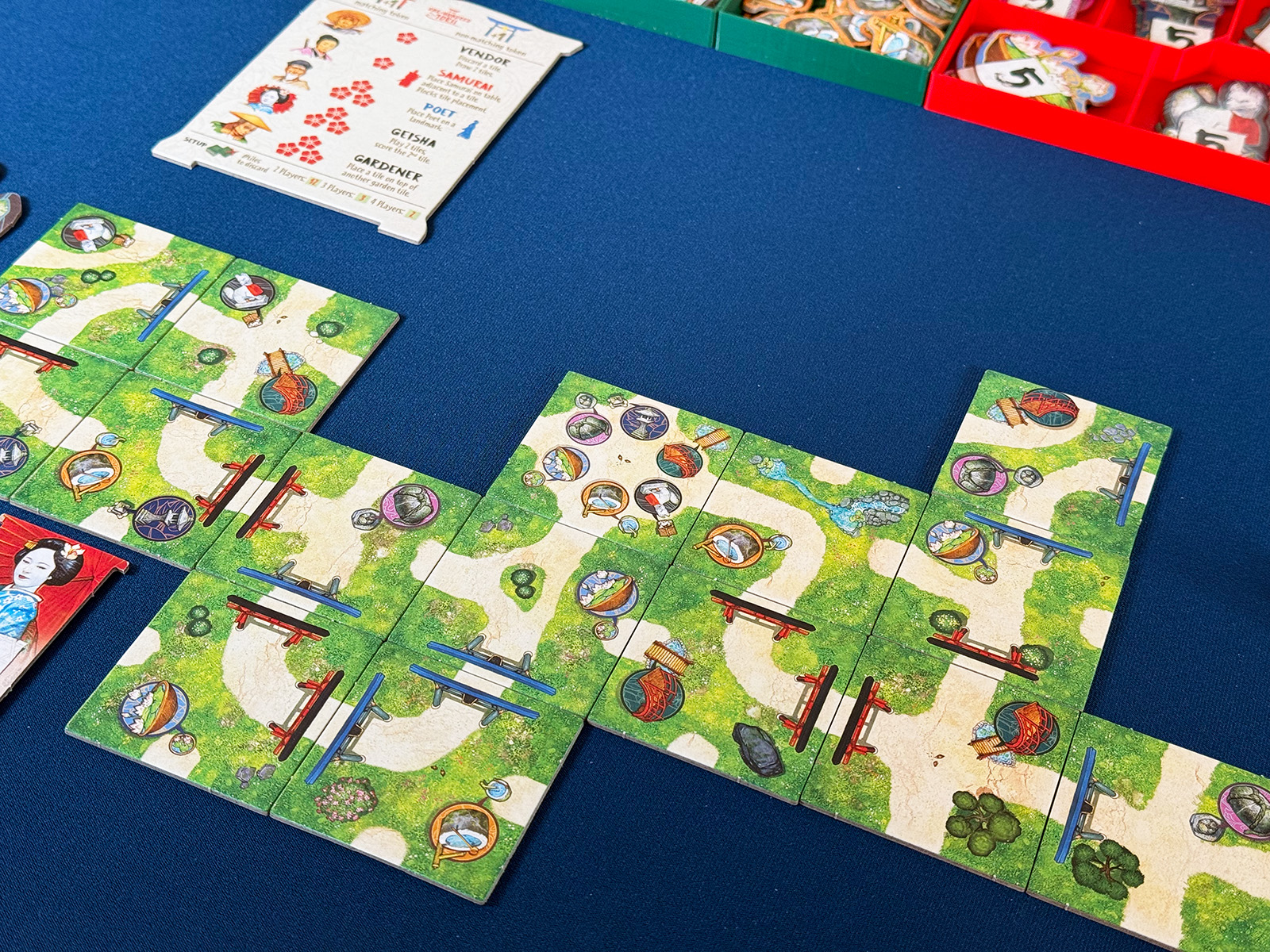
Gameplay involves placing tiles and tracing paths between matching features in the garden. Torii gates provide bonuses, while traveling characters offer helpful assistance. Onatsu knows these paths well, though, and managing her journey is a clever part of the solo mode.
Reuniting with Onatsu
Ah, my old nemesis! I say that in a friendly way, as Onatsu is one of those solo opponents I remember well. I even have her original hand-drawn art. Thanks to the artists!
While building paths through the garden and scoring well are key elements, Onatsu has her own unique journey. Each round, three tiles are drawn. Typically, one is played, and the other two go to Onatsu. This offers many choices.
Strategies come down to gaining victory points, but also managing which tiles are not chosen. It is a neat mechanic that makes every decision feel meaningful. I love it.
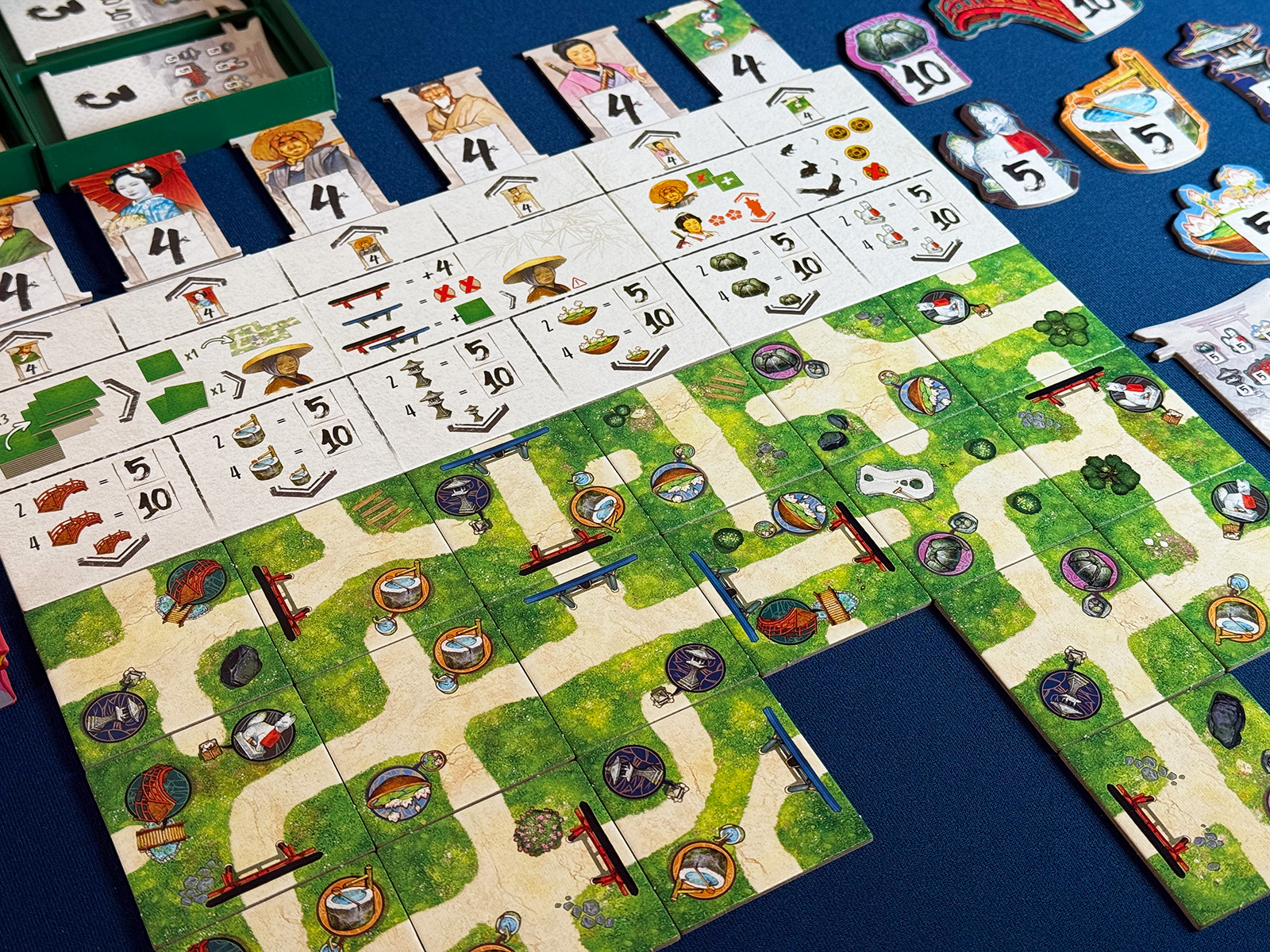
A Winding Path
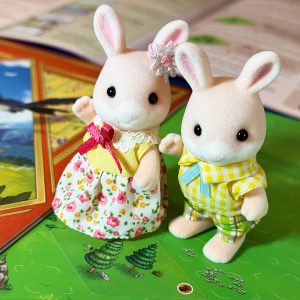
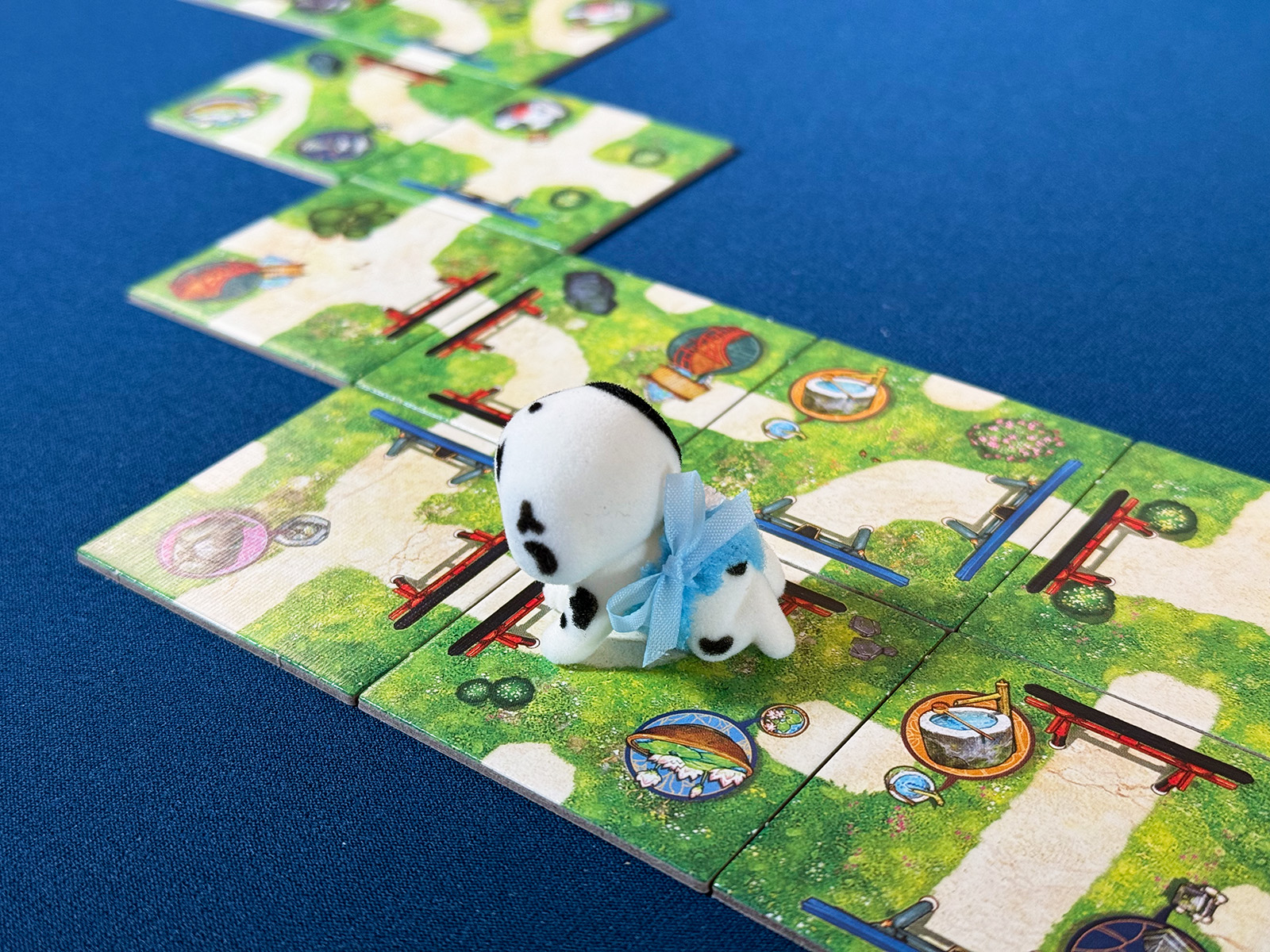
First, I continue to feature Calico Critters at my solo table. I have a randomized list I do not look at ahead of time, so it was a surprise when I drew the Dalmatian family.
Second, I do not always choose a common theme between these figures and the games I play, but today, I did. My husband suggested a different game, which would have been perfect. But my mind went in another direction, much like this zigzagging path through the garden. Wait for it…
Dalmatians! 101 Dalmatians. A-ha! To mangle a movie quote I love: “100, 101… Whatever it takes.” Masterful humor. Ha!
Defeating the Opponent
The base game includes several difficulty levels to tailor the experience. Since it had been so long, I started at the very bottom to work my way up to the expert difficulty level.
Starting out with coins definitely helped boost the early rounds with hiring characters. There are several different ones, ranging from a gardener to a samurai. So thematic.
But there is a catch. Characters offer victory points for being hired, yet each can only be hired twice during a play. I made some great decisions and kept Onatsu in check. It was neat to see her final board and immediately know how I fared.
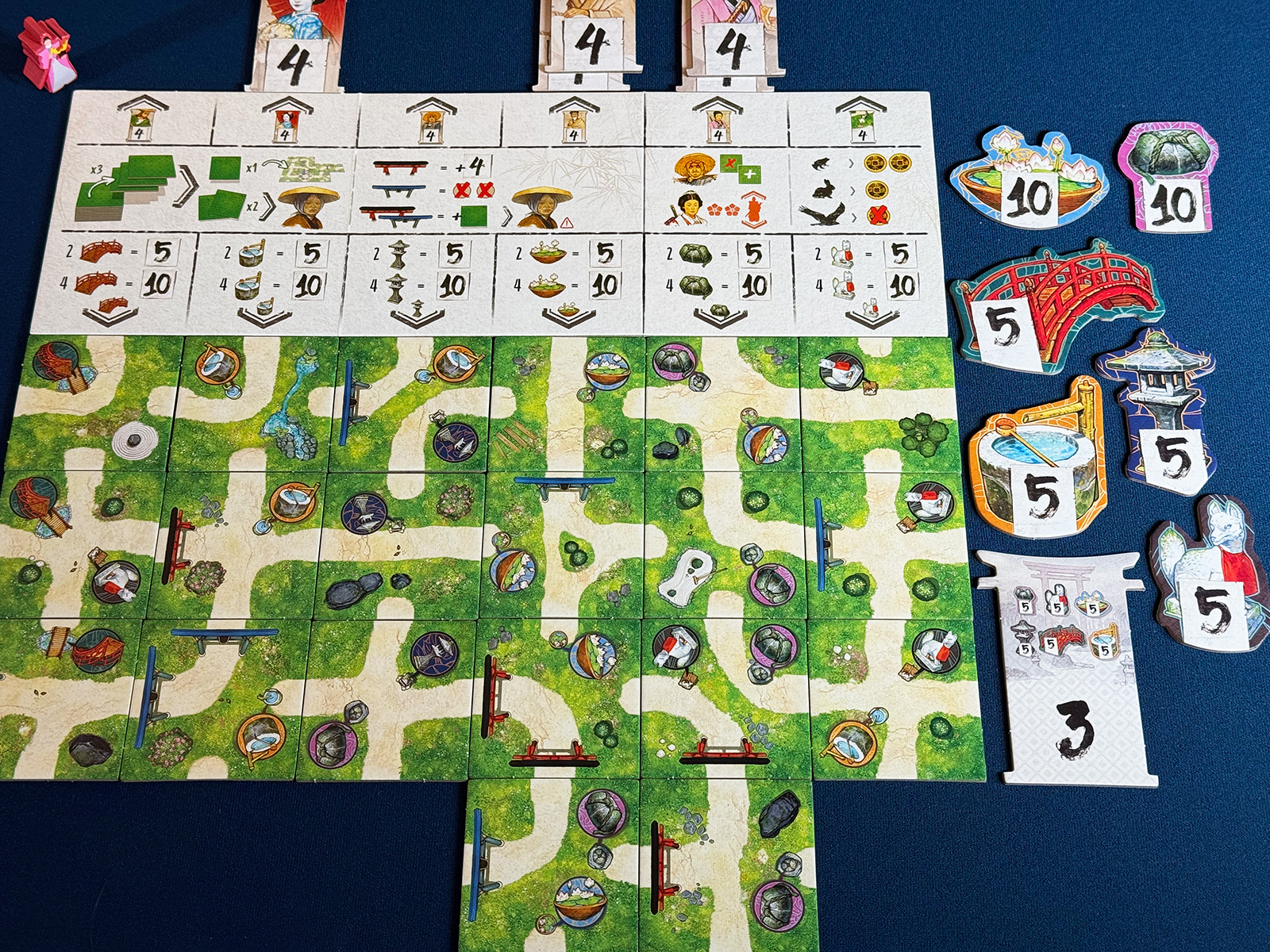
Learning from the Poet
My plays against Onatsu were far from mere walks in the park. Or, in this case, the garden. She was a challenge. I had to think about the characters and the best times to hire them. That limitation ensured I could not do everything I wanted to, which often indicates a solid game design.
These Calico Critters stopped to listen to the poet, whom I barely hired. Oh! That right there could be the problem. Indeed, I soon pivoted slightly to find a way to hire a character as often as possible. Even the gardener, who was the rarest visitor, finally made it into the character rotation.
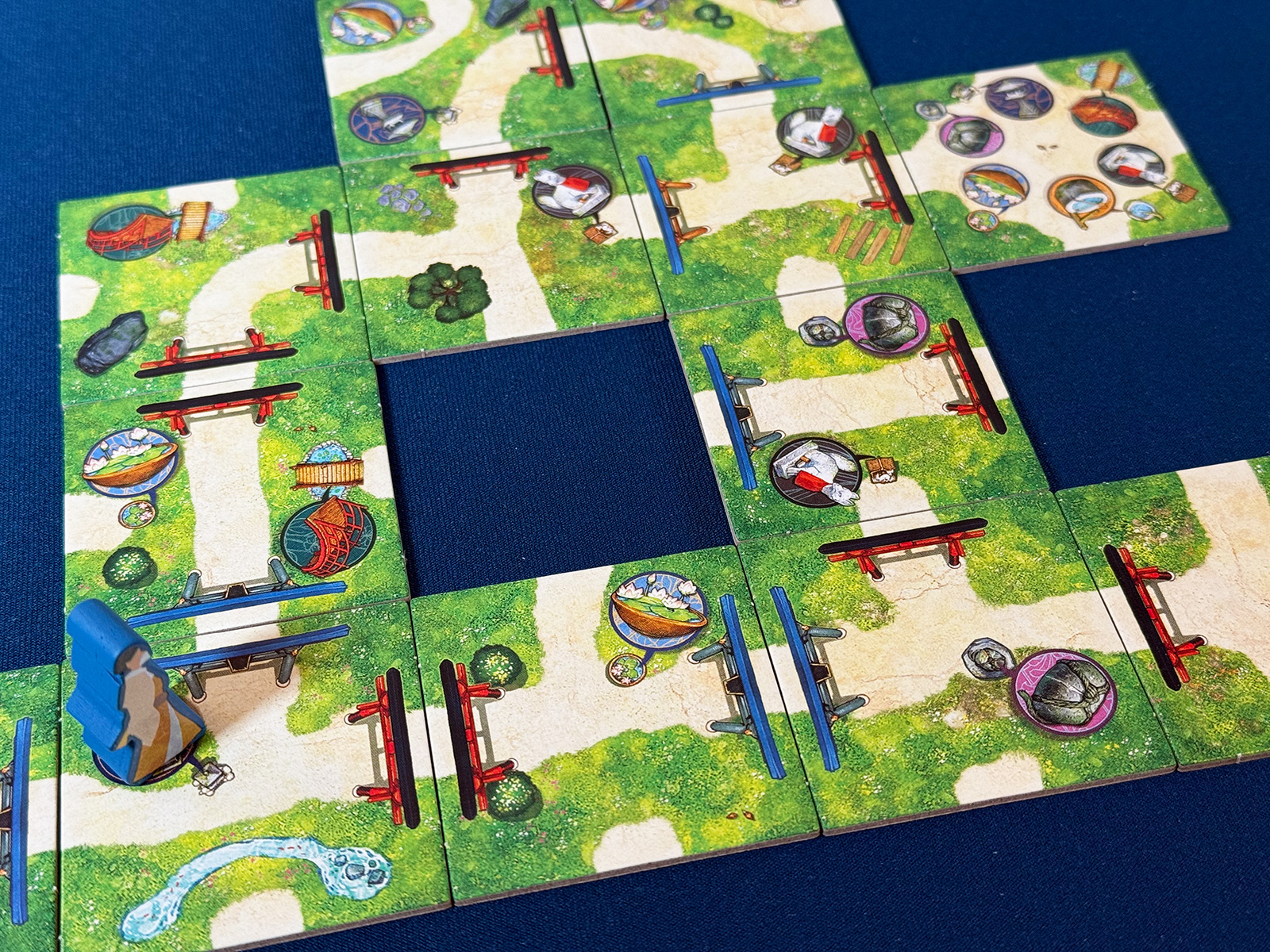
Following the Paths
I would not say that playing actually feels like walking through a Japanese garden, especially since the journey is about counting gates and tiles. But there is something so satisfying about following a path with my eyes, quietly counting how many small tokens I might pick up along the way. Even looking at Onatsu’s area is fun. So many little paths to travel down.
There are small details throughout the artwork that become apparent upon inspection. Little birds can be found. Water features are rare, but seem like they might add a pleasant musical note to some paths. Tiles may look somewhat empty at a glance, yet I have found myself enjoying the moments when I spy something unexpected. Those just add to the fun for me.
Not every game about creating paths works for me, and I sometimes struggle to “see” connections. Luckily, Onatsu has not seen the last of me! I like visiting this garden and discovering the surprises found beyond the walking paths.
Through the Gates
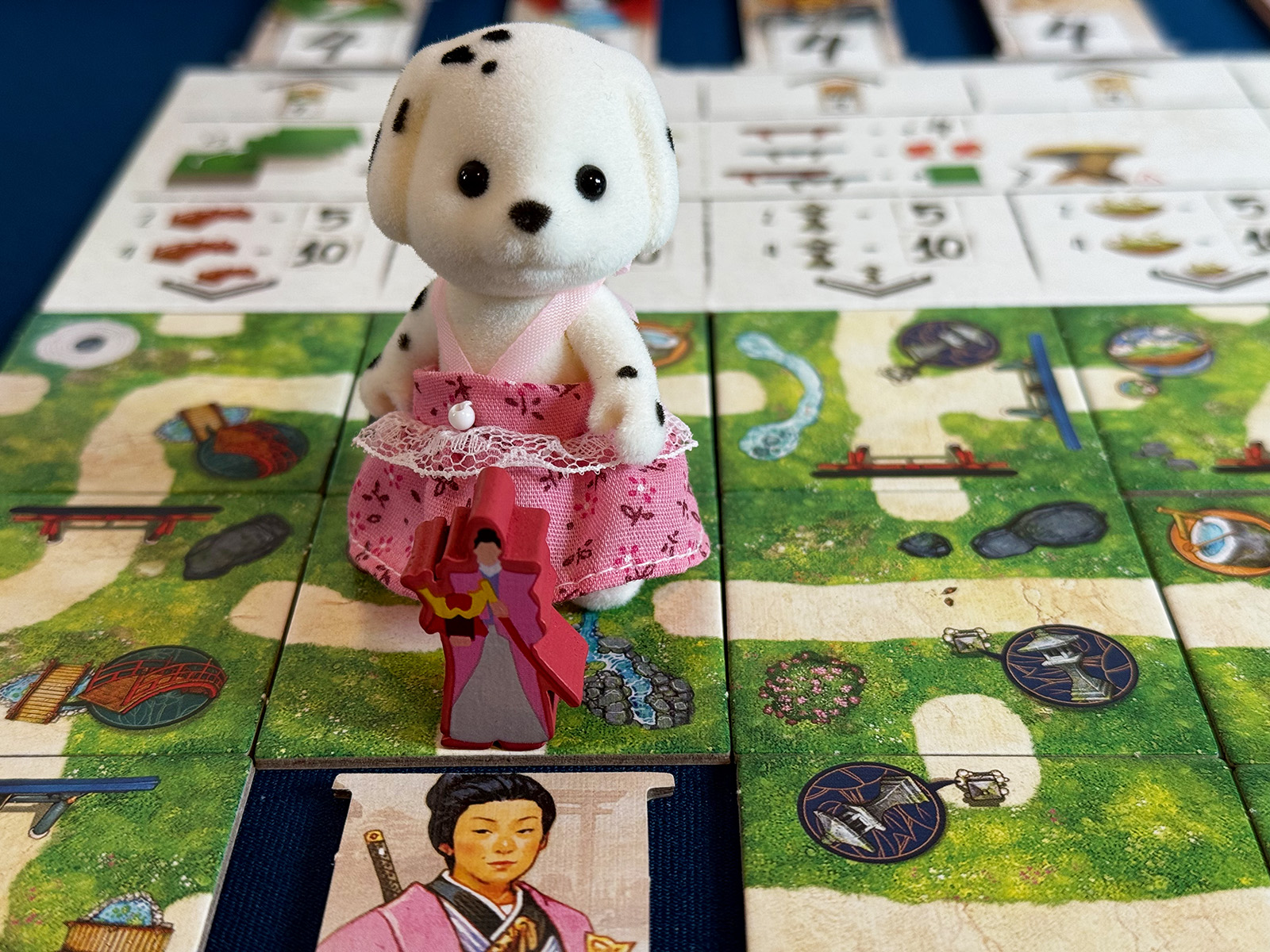
Since tokens are awarded based on the nearest matching feature, this can be difficult to turn into a consistent strategy. Torii gates might only be utilized once. Yet during this meandering play, I had a lantern on the tile in the bottom right. Just trust me, because I was apparently not an expert at framing this photo. I will blame… Onatsu? Ha!
Anyway, there was a lantern in the bottom left, which was not terrible, but was not very lucrative. Enter the poet! He spent his time writing about that lantern, thereby allowing my path to travel even further. So much better.
Sizing Up the Samurai
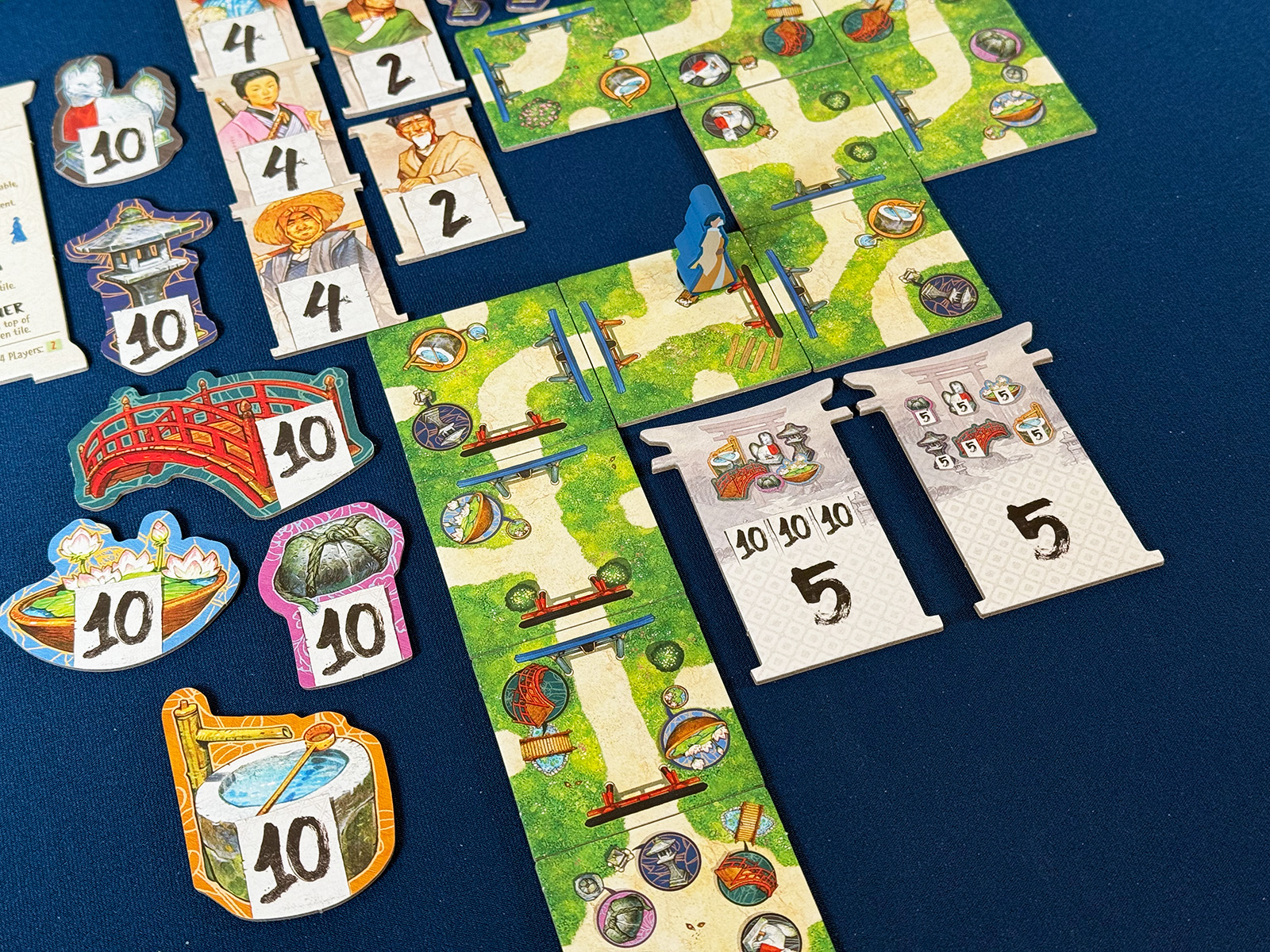
Hurray for another adorable Dalmatian! She was quite pleased with the samurai character’s ability, as was I. In the multiplayer game, she blocks a region from having a tile added to it. But for the solo mode, she blocks a column on Onatsu’s board from gaining tiles during the round.
With the right timing, this can mean that Onatsu will not gain any tiles! Ah, but recall that like all characters, the samurai may only be hired twice. Again, timing becomes critical. I pulled off some awesome moves in one of my attempts at the expert difficulty level. Onatsu was defeated, at last!
Session Overview
Play Number: 13-18
Solo Mode: Included in the Base Game
Play Details: Beginner, Intermediate, & Expert Difficulty
Outcome: 59-77, 81-65, 81-67, 73-78, 53-87, 86-79 (3 W & 3 L)
So satisfying! There were some wild swings here and there, but I kind of knew what was going on when I lost so horrendously. Onatsu was challenging at nearly every difficulty level, although expert certainly makes the most sense for me. It was awesome to score so well with these tokens during my final outing, which was still close, but I came away with a better journey. Until next time, Onatsu!
Pros and Cons
Positives
- The solo mode presents interesting choices in terms of choosing what to use, and how to manage the solo opponent.
- Visually tracing paths through the tiles is relaxing and fun, particularly when traveling through many gates.
- Limitations on hiring characters and collecting tokens make each turn feel impactful, adding thoughtful moments.
- Gameplay moves at a nice pace with a clear sequence and method to hand tiles over to Onatsu in an organized area.
- Many subtle strategies exist and are not necessarily apparent during the first few plays, adding layers and depth.
Negatives
- Although the icons are pretty clear, seeing which path they are located on can occasionally be a little difficult.
- Some degree of luck is involved in scoring well against Onatsu at times, as the score differential can be a lot.
- Excess small tokens can accumulate quickly near the end, even though they offer no additional victory points.
Final Thoughts
My plays against Onatsu were far from mere walks in the park. Or, in this case, the garden. She was a challenge. I had to think about the characters and the best times to hire them. That limitation ensured I could not do everything I wanted to, which often indicates a solid game design. These Calico Critters stopped to listen to the poet, whom I barely hired. Oh! That right there could be the problem. Indeed, I soon pivoted slightly to find a way to hire a character as often as possible. Even the gardener, who was the rarest visitor, finally made it into the character rotation.