In this series, I like to talk about specific cards from the wargames I play. I want to share how these cards work and how to use them. I am not a master player, and I do not always win, but I understand how games are supposed to work. Here is another card I want to tell you about.
#64: Guns of August from Paths of Glory
The game is called Paths of Glory: The First World War, 1914-1918. It comes from GMT Games. Many people think this game is a masterpiece about World War I. After playing it a few times, I can see why. Even though we are new to the game, it tells a great story. It shows how the Entente and the Central Powers fought hard for control of Europe. The game takes a long time to play. You usually need a whole weekend to finish it properly. But it is a great way to understand the problems of trench warfare and keeping your army supplied. I really like the mix of history and choices you have to make. But I have to warn you: watch your supply lines. In our games, we often ran out of supply and made big mistakes. I am not very good at this game yet. The details of supply and movement keep tripping me up. But I still enjoy every game and look forward to playing more.
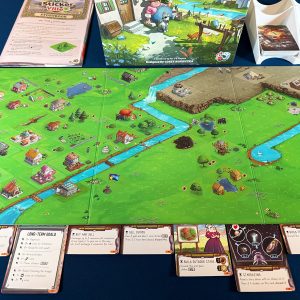
I will use pictures from the game in this post. They might look a bit different from my usual articles.
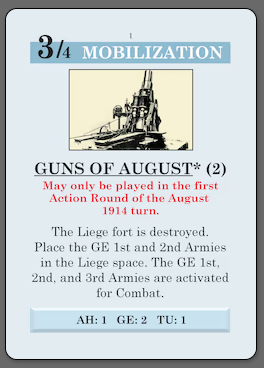
In almost every game, the Central Powers player will start by playing the Guns of August card. This is a very important card for the start of the game. It lets the Central Powers attack right away with a lot of power. The Guns of August card is a 3/4 Operations card. It is in the Central Powers hand at the very start. It gives them the first move. First, the card destroys the fortress at Liège. Then, it gives a big boost to mobilization. It moves two German Army counters from where they start. This includes the German 1st and 2nd Armies. It activates them to attack. It also activates the German 3rd Army, which starts in Koblenz.
This gives the Central Powers player two choices for the first attack. They can attack the British Expeditionary Force in Brussels. Or, they can attack the French 5th Army in Sedan. The card lets the Central Powers destroy Liège, move armies forward, and attack immediately. In my opinion, the British Expeditionary Force (BEF) is the best target. This unit cannot be replaced. If you remove it, the path to the fortress at Antwerp opens up.
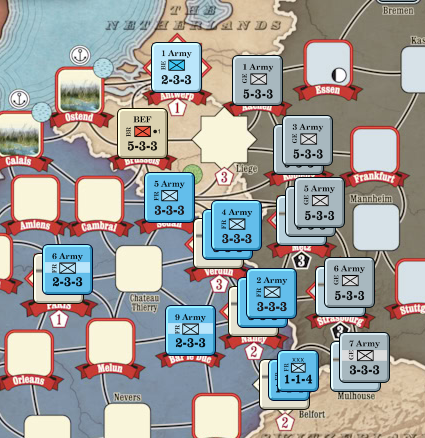
Playing the Guns of August card is an aggressive move. It also helps Austria-Hungary survive against Russia. The Allied player has to use their resources to fix the holes in the front. They cannot use those resources to help the Russians in the east or the Serbians in the south. Paths of Glory is a lot about managing resources. You have to keep the pressure on, but you also have to rebuild your troops. You can only attack for so long before you get tired. You have to spend time to recover. Using the Guns of August card well saves resources for other places.

There are other ways to use the card. If the Central Powers player does not use the event, they can use 1 Operation Point to destroy the Liège fort. This saves the card for later. Or, they can switch to a defense, like defending the Rhine.
In the end, I recommend using the full attack. It puts a lot of pressure on the Allies. In the picture, you can see what usually happens. The BEF is weakened. The French 5th Army breaks. It is replaced by a smaller Corps counter. This smaller unit cannot attack well. It is just there to protect the back line.

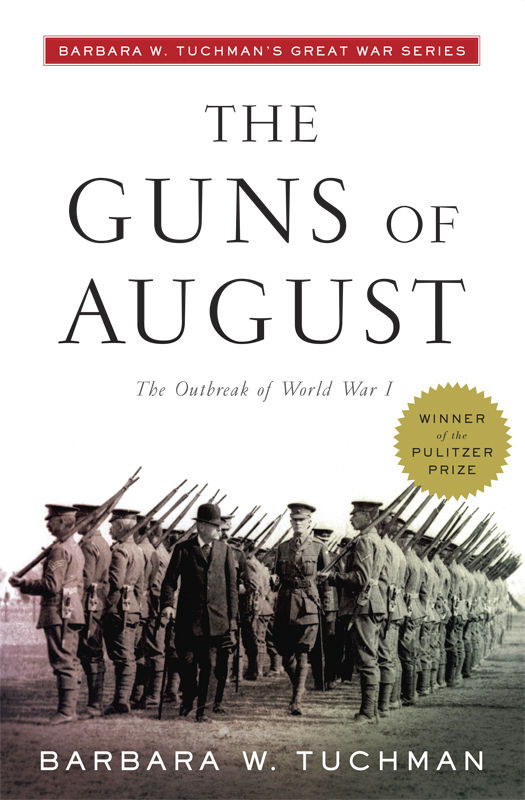
The book The Guns of August was written by Barbara W. Tuchman in 1962. It is about the first month of World War I. The book describes the start of the war in great detail. It looks at the military plans and the world leaders.
The book covers the time from the decision to go to war until the fighting stopped in France. This led to four years of trench warfare. The book talks about military plans, world events, and how people felt before and during the war.
The book won the Pulitzer Prize in 1963. It was very popular. Tuchman wrote another book later about the time before the war.
In the next part of this series, I will look at a card from Churchill: Big 3 Struggle for Peace from GMT Games.
-Grant