Mathias Wigge made a huge splash in the board game world with Ark Nova. That game, which mixes building a zoo with tableau building and clever card mechanics, remains incredibly popular. It currently sits at number two on the BoardGameGeek all-time list. Sanctuary is a spin-off of that hit game. When it was announced, many people, including myself, worried it might just be a quick way to cash in on the name. I am happy to say I was completely wrong. Sanctuary is not just a copy. It takes the DNA of its big brother and turns it into something very different. While it shares some ideas, it plays differently enough that there is definitely room for both games in your collection.
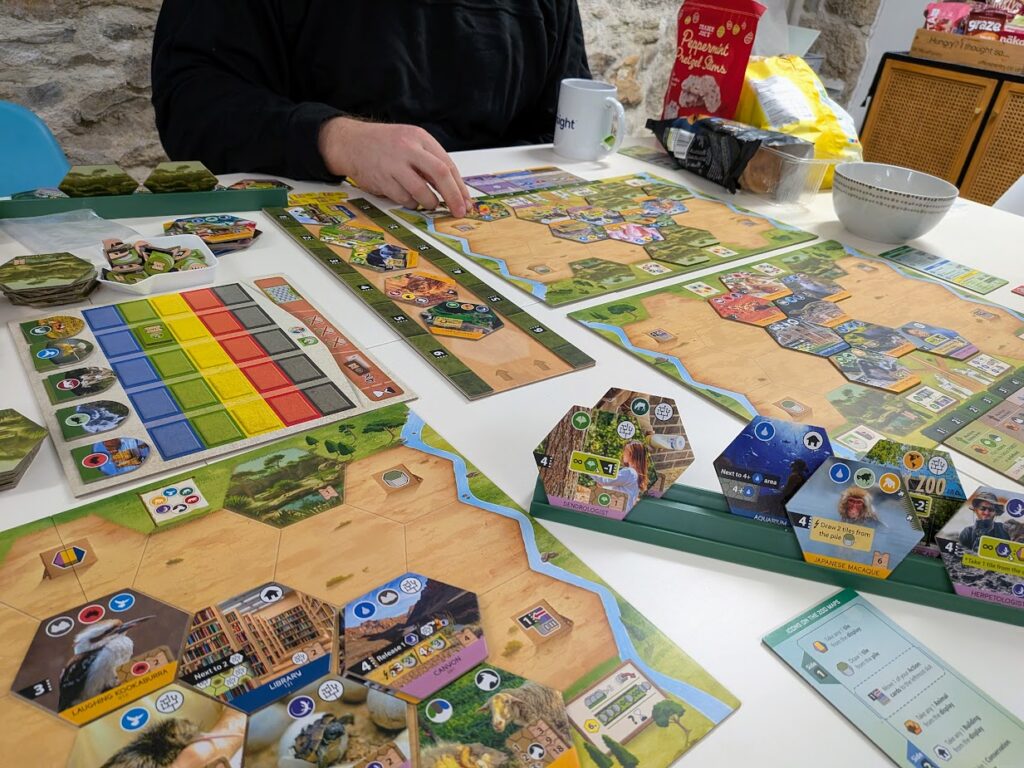
If you already know how Ark Nova plays, you can skip the basics. If not, you can find my review of the original game elsewhere. In Sanctuary, your goal is to create a wildlife park. You do this by drafting large hexagonal tiles. These tiles feature different animals, buildings, and projects. You place them on your personal player board. The challenge is to place them strategically to get the most points from every single tile you put down.
There are six types of animals in the game. They come from five different continents. Antarctica is not in the game, and North and South America are combined into one region. Each animal has icons showing its traits. Much of the scoring in Sanctuary is based on these icons. You might score for having a total number of specific icons or for creating chains of tiles with matching symbols. Sanctuary is a spatial game focused on strategic tile placement. If that sounds like fun, you will likely enjoy this game.
Action stations
One of the coolest features of Ark Nova is how the action cards work. Sanctuary uses this same system, but it is slightly simplified. This makes the game more accessible and easier to learn. You have four action cards located below your player board. Each card has an arrow pointing to a number above it. This number represents the strength of the action. For example, if you want to place a water animal that requires a strength of four, you look at your water card. You must make sure its arrow is pointing at the number four or higher.
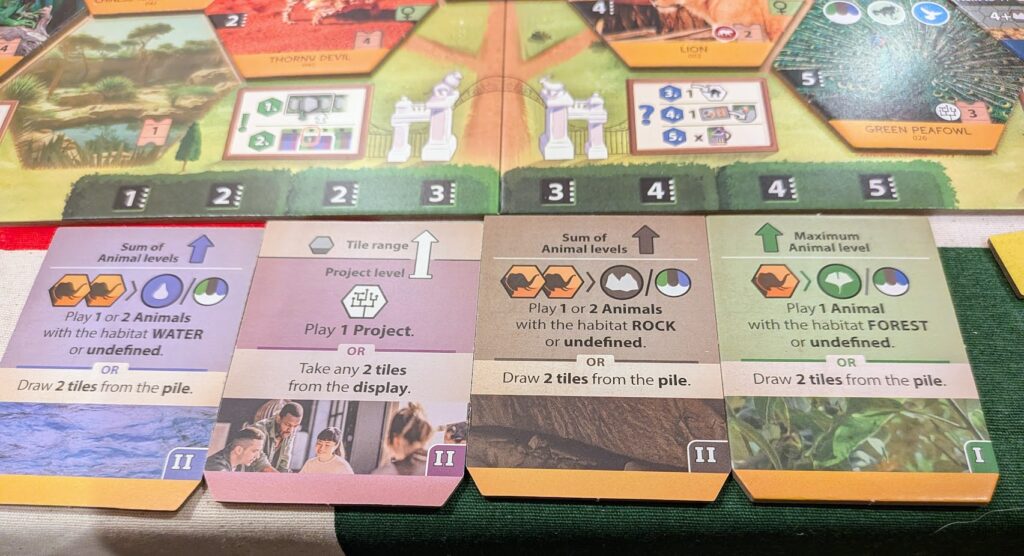
The clever part of the system is how the cards move. When you use an action card, it moves all the way to the left. This pushes the other cards to the right, moving them up to higher numbers. This increases their strength for future turns. During the game, you can also upgrade your cards by flipping them over, giving them even more power. It is a really nice system that allows for some planning. You can set up powerful turns by managing your cards carefully.
One thing I really like about Sanctuary is that you do not need to use an action just to get new tiles. You must take at least one tile every turn, but it happens automatically. This is a nice feature for a game aimed at lighter strategy fans. It means you can focus entirely on placing tiles into your zoo. You do not have to worry about spending actions just to get the tiles you need to place.
Location, location, location
Sanctuary takes one of the most underused aspects of Ark Nova and makes it the main focus: the relative placement of tiles. In the original game, where you placed a specific habitat often did not matter much. Some animals needed to be next to rocks or water, and some maps had bonuses for certain spaces, but mostly placement was flexible. Sanctuary flips this on its head. Now, choosing where each tile goes is the most important decision you make.
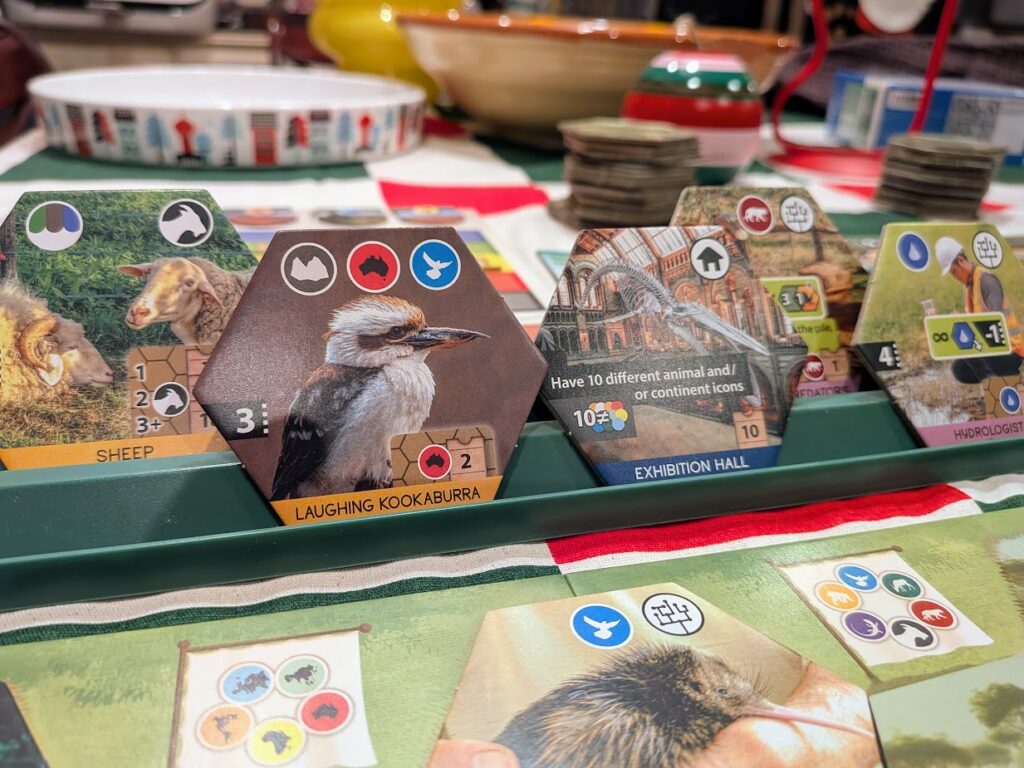
As mentioned earlier, some tiles have end-of-game scoring conditions that require them to be connected to other tiles of the same kind. Others like to have as many different icons surrounding them as possible. Some animals have male and female counterparts in the game. Placing them next to each other gives you bonuses, so it pays to think about their neighbors.
More awkwardly, some creatures you choose to house are not very sociable. Or they might be dangerous. These animals demand that empty spaces be left adjacent to one or more edges of their tiles. To create an empty space, you flip one of your tiles over and place it down where it needs to go. This feels like a big decision. Open spaces get in the way because they actually do block your layout. In a game where you want every tile to score or give bonuses, leaving a tile fallow feels harsh.
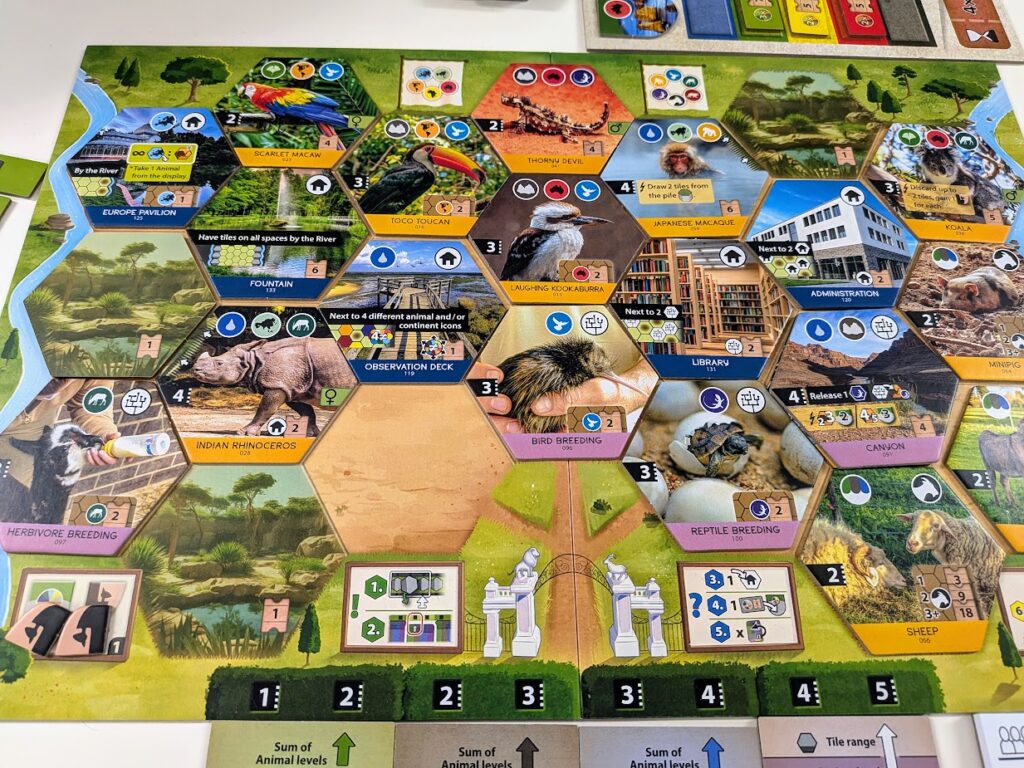
Given the huge number of tiles in the game—135 in total—you might feel overwhelmed at first. Luckily, the game gives you some direction through objectives drawn at random before each game. These objectives might reward you for collecting a certain number of European or Asian icons, or for focusing on herbivores or predators. There is a big change in how objectives work compared to Ark Nova. In Sanctuary, all players can complete any objective. You are never locked out by other players. Your only decision is when to use an objective marker. You can trigger it early to use a 2x tile, or wait and use a 5x tile for a potentially bigger payoff at the end.
Final thoughts
Sanctuary is an interesting game. It looks very simple on the surface, but once you start playing, you realize there is a lot going on underneath. It is one of those rare games that works well for different types of players. You can let younger or inexperienced players build a zoo with the animals they like best and they will have a good time. At the same time, hardcore players can expend serious mental energy trying to optimize every decision and placement. Games that cater to both ends of the spectrum so well are hard to find.
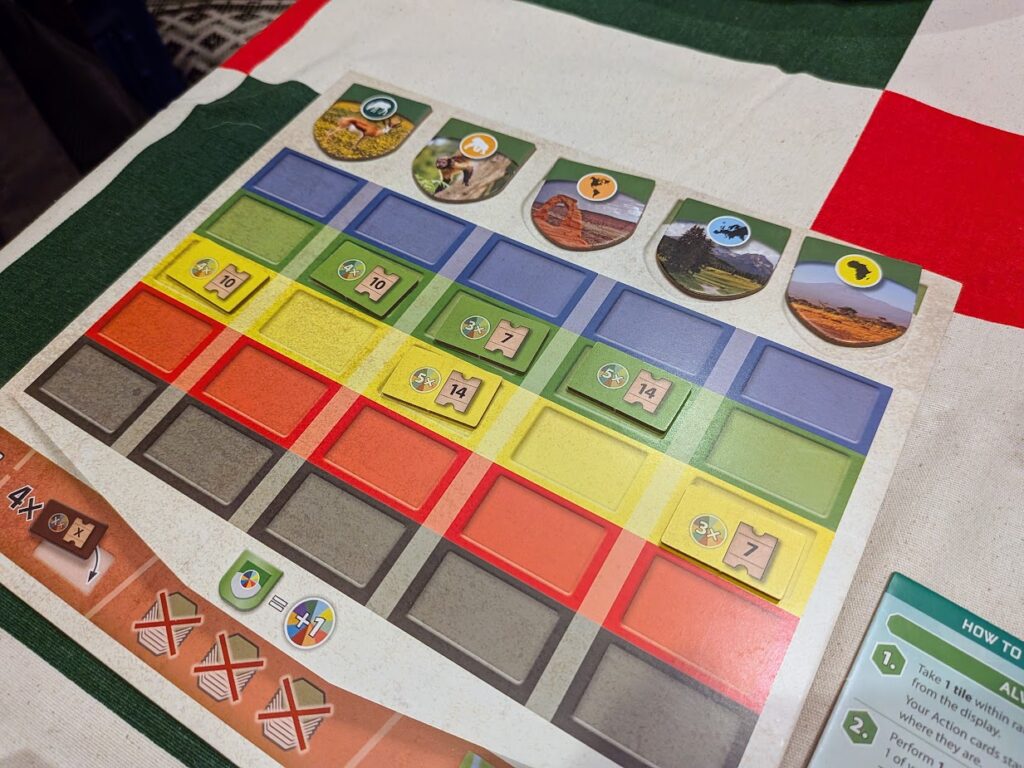
So, where does Sanctuary fit in your game collection? If I had to place it, I would say it sits nicely between a game like Castle Combo and the full Ark Nova experience. The idea of making each tile score well based on its neighbors, combined with the objectives and the action card system, creates a unique feel. It wedges itself right there on the shelf between those two types of games.
I also want to mention the components. The tiles are thick, heavy, and very colorful. The publishers included nice, big plastic tile holders, so you do not have to worry about how to hold and arrange your tiles. The objective board feels and looks a little bit cheaper in comparison, but it is a small complaint about an otherwise excellent game. Sanctuary is lighter than Ark Nova, but it still has enough depth to keep you engaged. Yes, I believe there is space in your collection for both. I am curious to see what Mathias Wigge designs next, especially in a non-animal theme, because he is two for two so far.
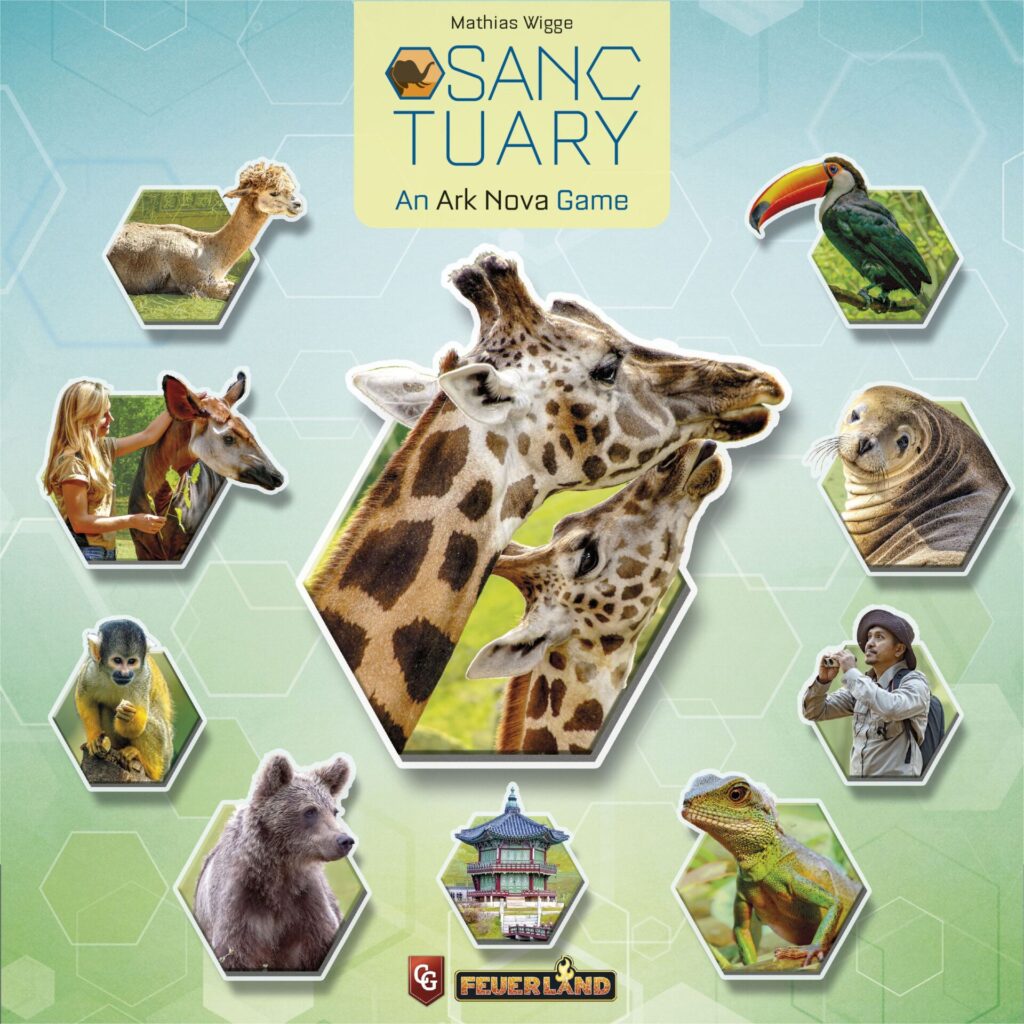
Sanctuary (2025)
Design: Mathias Wigge
Publisher: Capstone Games, Feuerland
Art: Dennis Lohausen, Christof Tisch, Felix Wermke
Players: 1-5
Playing time: 40-100 mins