The name Doggerland is pretty funny, isn’t it? But knowing a bit about what it means might help. Doggerland was a huge piece of land that used to connect Britain to places like France, Belgium, Germany, Denmark, and the Netherlands. This was about 10,000 years ago, before the sea covered it. The board game Doggerland is all about living back then – hunting for food, gathering what you need, growing your group of people, and even making art. I like to say it’s like the board game Stone Age, but for grown-ups.
Stone Age was one of the first modern board games I ever got, and I still keep it. It’s a straightforward and good-looking game where you place your people to do jobs. It feels a bit simple to me now, but I still have a fondness for it, like a first love. Doggerland uses many of the same ideas as Stone Age, but it adds a lot more layers, making it feel much more involved.
Gathering Resources
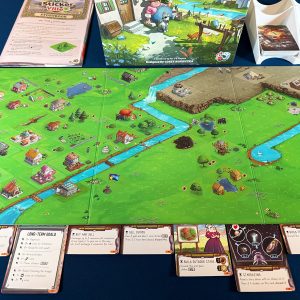
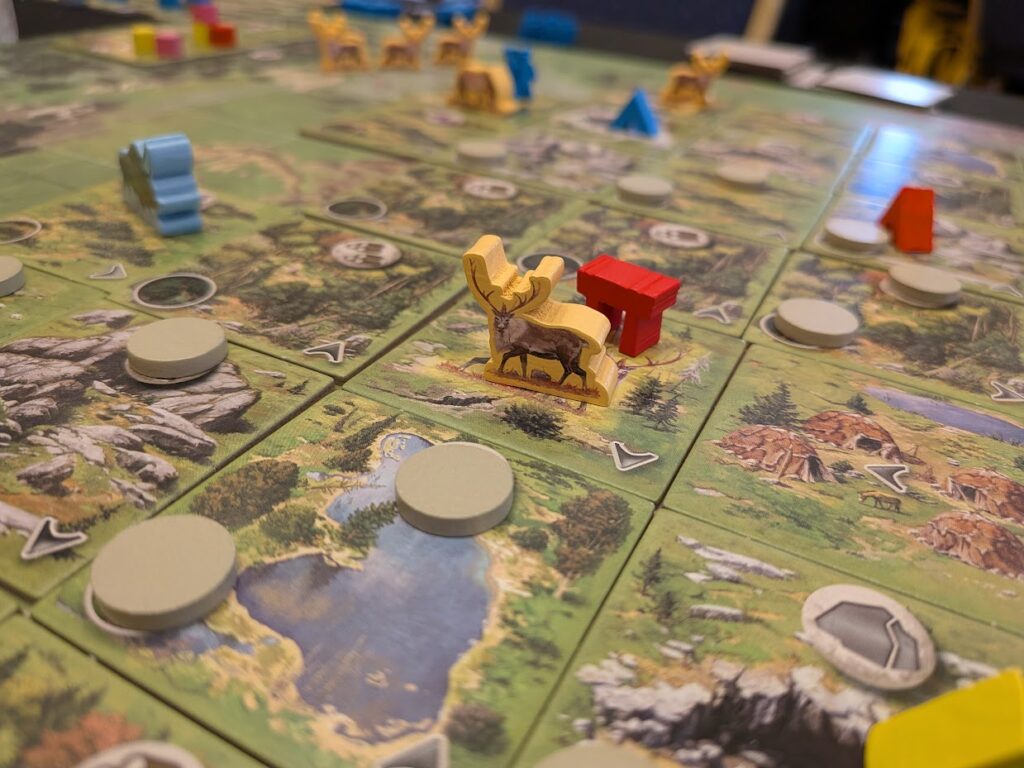
The basic idea is the same. Each player has their own board where their tribe members live. Players take turns putting their little people onto different spots on the main board to get things or do actions later. This is very much like Stone Age. The biggest change is the game board itself. Instead of a fixed map, the middle part is made of square tiles. Each tile has something your people can gather or a task they can do, like finding fruit, small animals, stone, or wood.
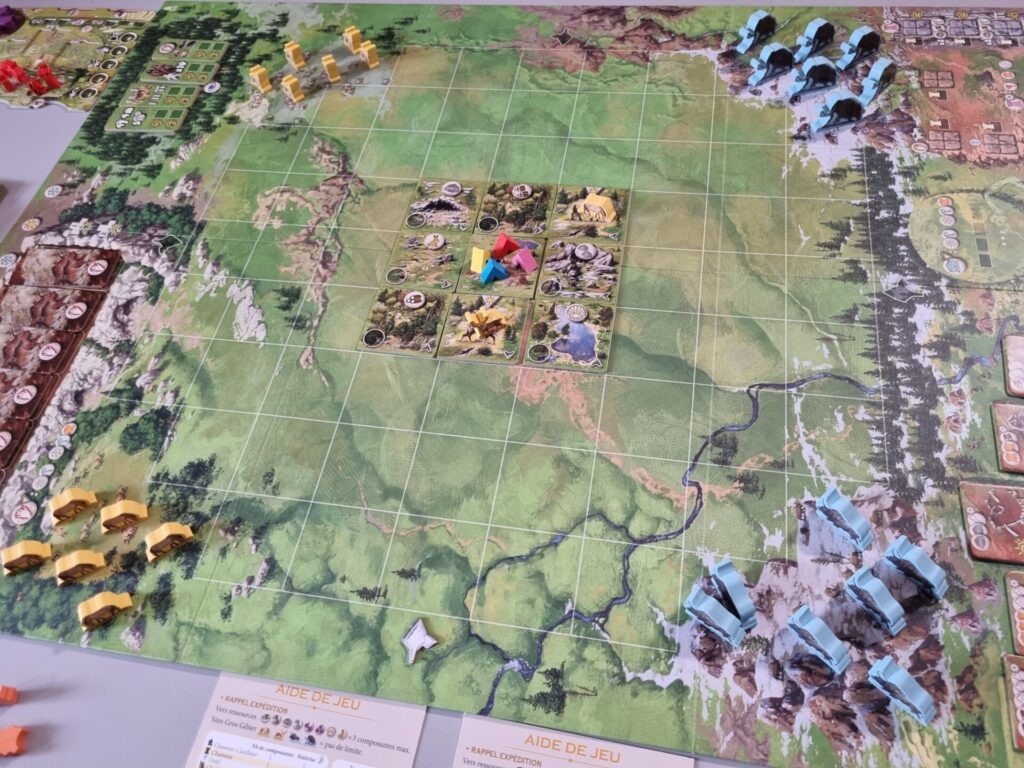
A major difference from Stone Age is that the resources are harder to come by. In games with three or four players, each spot can only be used twice. For two players, it’s only used once. I think this is a smart way to design the game because it does two important things.
First, it creates real competition. Not only are the resources limited, but only one player can be on a tile at a time. Being the first player to a spot can be very important. Second, it makes you want to explore. Any empty spaces next to tiles where players have put their people get new tiles added to them each round. This hopefully gives you more chances to get what you need later on.
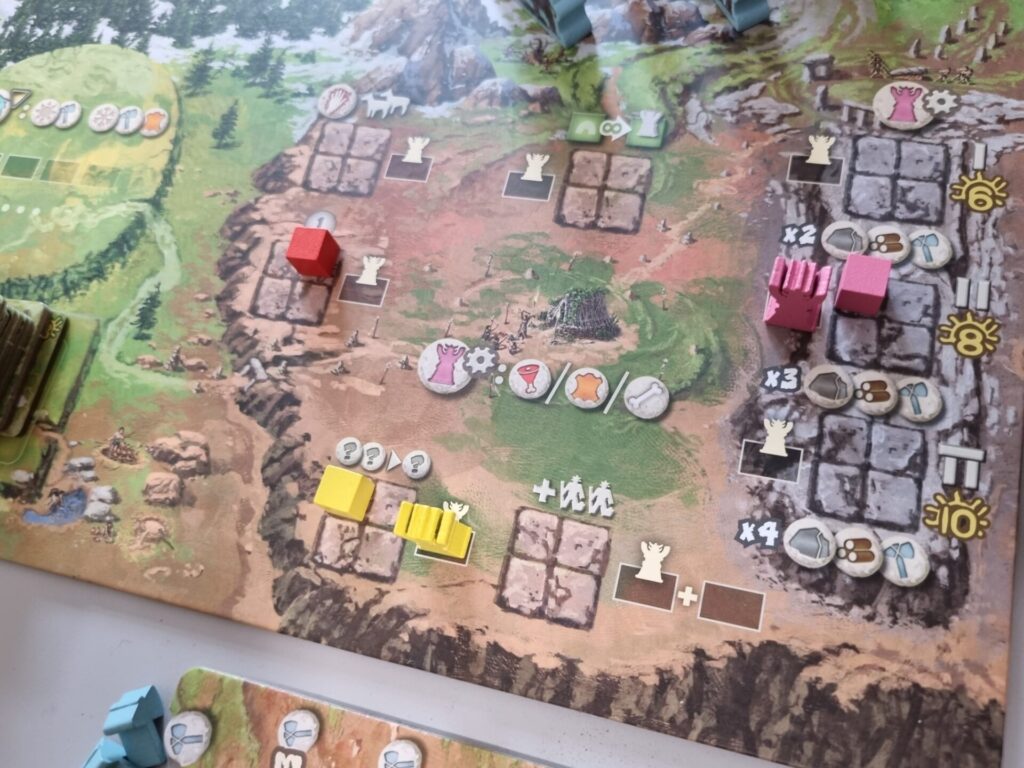
Another idea Doggerland shares with Stone Age is how actions are planned. Even though you place your people one by one, the actions don’t actually happen until you take your people back. For example, you could place a person on a spot to make something, even if you don’t have all the materials yet. You plan to get those materials with another person you’ll place on a later turn.
Hunting Big Game
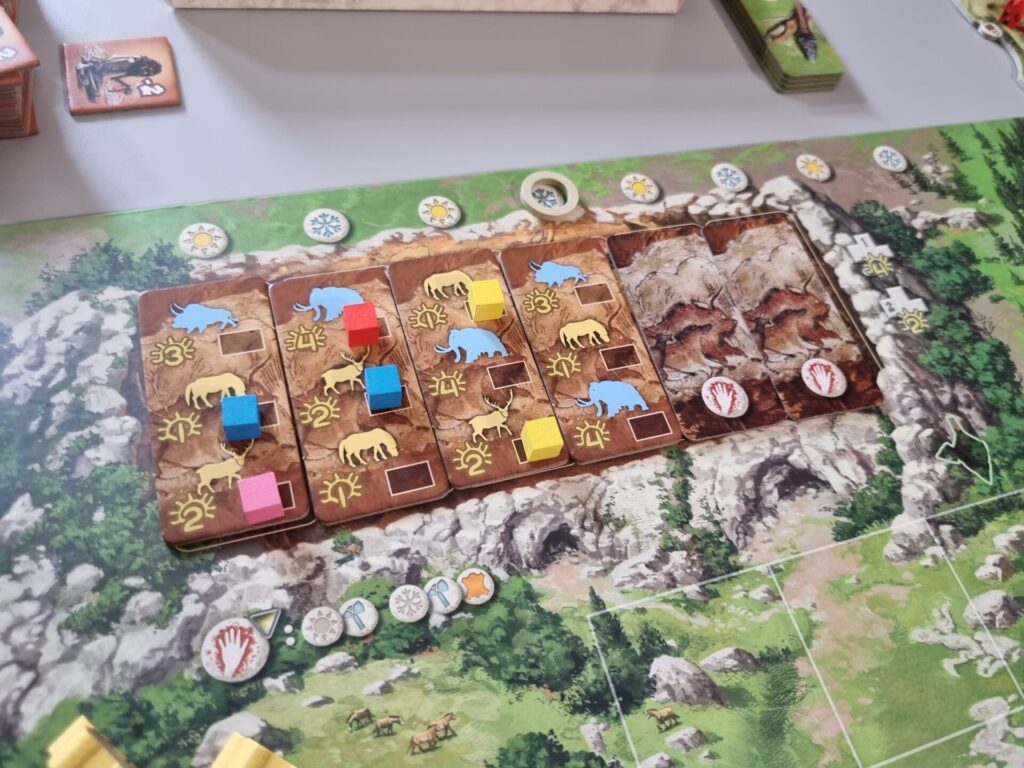
One of the best parts of Doggerland is hunting large animals. During the game, you get chances to hunt. Horses, deer, bison, and even woolly mammoths appear on the board at different times. You can plan to send a hunting group after them. Hunting is tricky, though, and needs careful planning. Each person you send adds one point to your hunting skill, and your leader adds two. But there’s a limit to how many people you can send hunting, so you might need to give them tools or weapons sometimes.
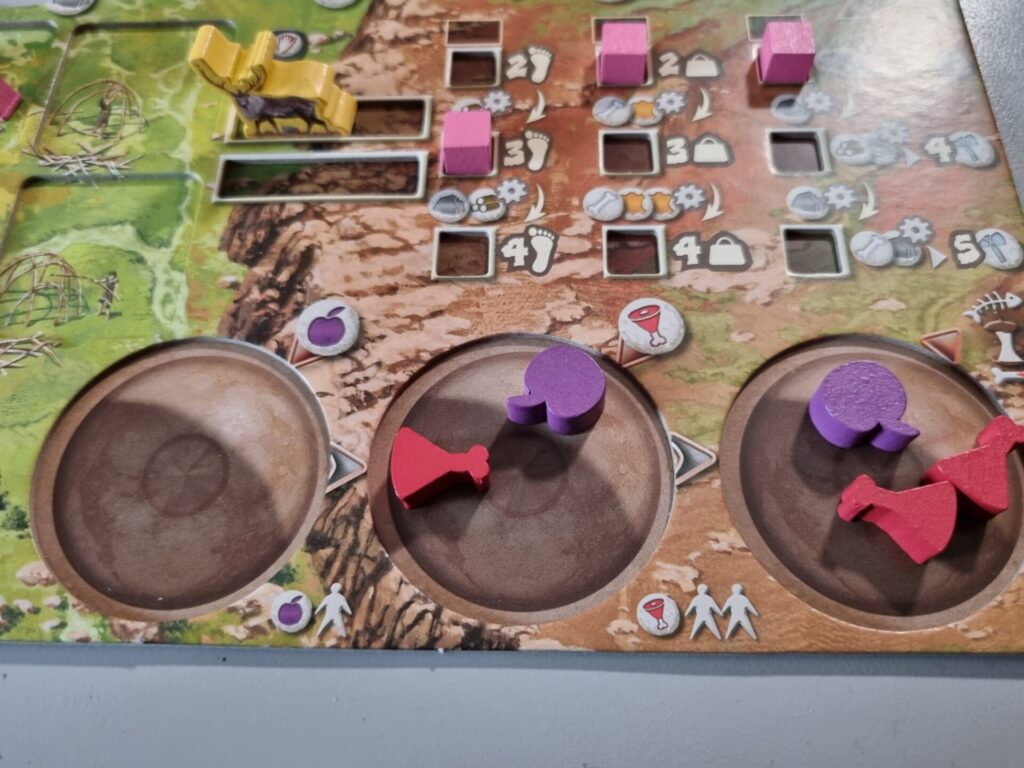
You make these tools by using certain action spots, which themselves require resources to create first. It’s worth the effort, though. You get furs, bones, and meat to eat. Plus, your tribe gains a shared memory of the animal they bravely hunted. These memories, shown as animal figures on your player board, let you create cave paintings. These paintings are part of a shared area where players score points at the end of the game based on who has the most of certain things.
Everything in Doggerland is connected. You always need one thing to do another, and you can’t avoid certain actions. For instance, you need furs to do things during the winter rounds, which happen every other round. It’s important to mention this because some people might not like the idea of hunting in games, and that’s okay. Knowing this beforehand is helpful.
A Challenging Game
Doggerland’s biggest hurdle is how complicated it is. No single action is very hard on its own. For example, taking a turn just means picking up a person and putting them somewhere. But deciding which spot to choose, and when to place them – that’s the difficult part.
It requires a lot of thinking ahead and a lot of learning before you even start playing. It’s one of those games where you really need to understand what everything does and how it all fits together for the long run. You need to know how to improve things like how much you can carry or how far you can move. You need to understand where the big animals will go if they aren’t hunted. You need to know how the special Shaman actions work, how scoring for the cave paintings works, how food spoils over time, and how much of each re
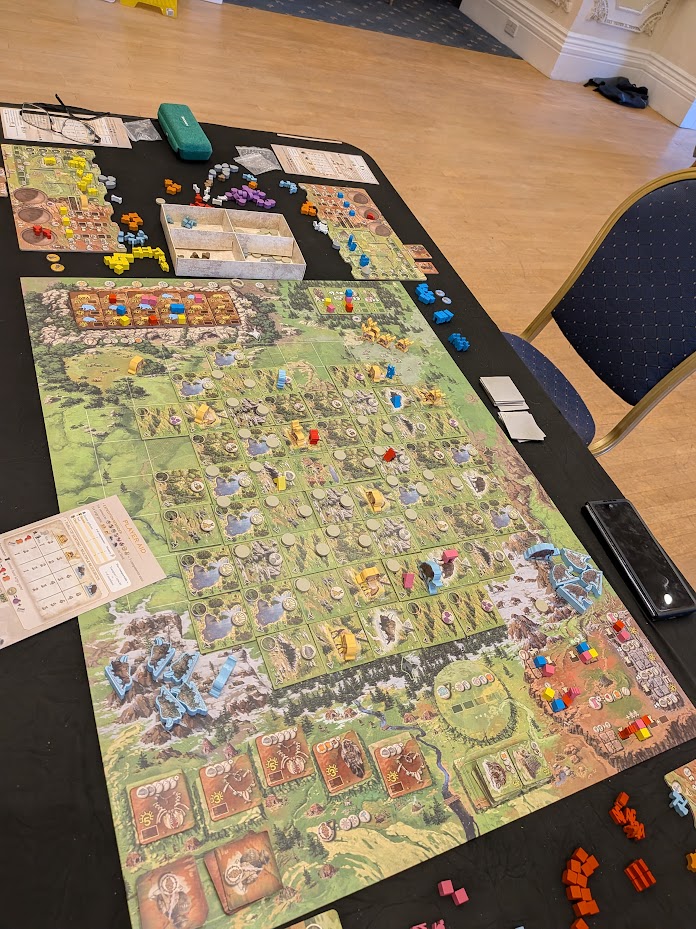
And just when you think you’ve got a handle on it, you also have to consider what other players are doing. You need to figure out what to do if someone takes the spot you wanted because they’re being a real pain. There are many different resources to manage, and many ways to use them.
It’s also a long game. There’s a shorter way to play, which I suggest trying once you know the game well. But, oddly enough, the longer game is actually better for new players. It gives them a few rounds to get used to things and more chances to use the special Shaman actions that can only be used once. The shorter game just gives everyone a head start, a bit like using an extra set of cards at the beginning of another game called Terraforming Mars, or using different rules for a game called Abomination: Heir of Frankenstein.
Enjoying this article? Consider supporting me.
This doesn’t mean the game is bad. Not at all. But for some people, Doggerland might be too much. If that’s the case, it’s better to start with Stone Age and see how they like it.
Final Thoughts
Doggerland is one of those games that people often look for when they want something special and not widely known. It didn’t get a lot of attention when it came out, and you don’t see many pictures of it being played. That’s a shame. Doggerland is a great game, and more people should know about it.
If you played Stone Age and liked the theme, or wished it had more to it, then Doggerland was pretty much made for you. It might not have the ‘Love Hut’ (you probably called it something else in Stone Age…), but you can still have more people in your tribe. Gathering and using resources feels very rewarding. The way the map changes and the puzzle of placing your people is more challenging than it looks. I also really like how you can choose to improve your own tribe in different ways.
I think the game is much better with three or four players than with just two, but it’s still fun. For a two-player game where you want something really complex, I might pick a different game. It’s definitely too much for someone who thinks Ticket to Ride is complicated, which might mean you won’t play it very often. Other than that, I highly recommend Doggerland. The game is excellent, the quality of the pieces is very high, and it all works together very well. It’s the hidden, deep game you’ve been searching for.
Good and Bad Points
Good Points
- It’s like Stone Age for people who like complex games.
- A great open world to explore and try different strategies.
- The game pieces and board look and feel high quality.
Bad Points
- It’s a difficult game to learn and explain to others.
- The long game can sometimes feel a bit slow.
- The little boxes that hold the resources tend to let them get mixed up!
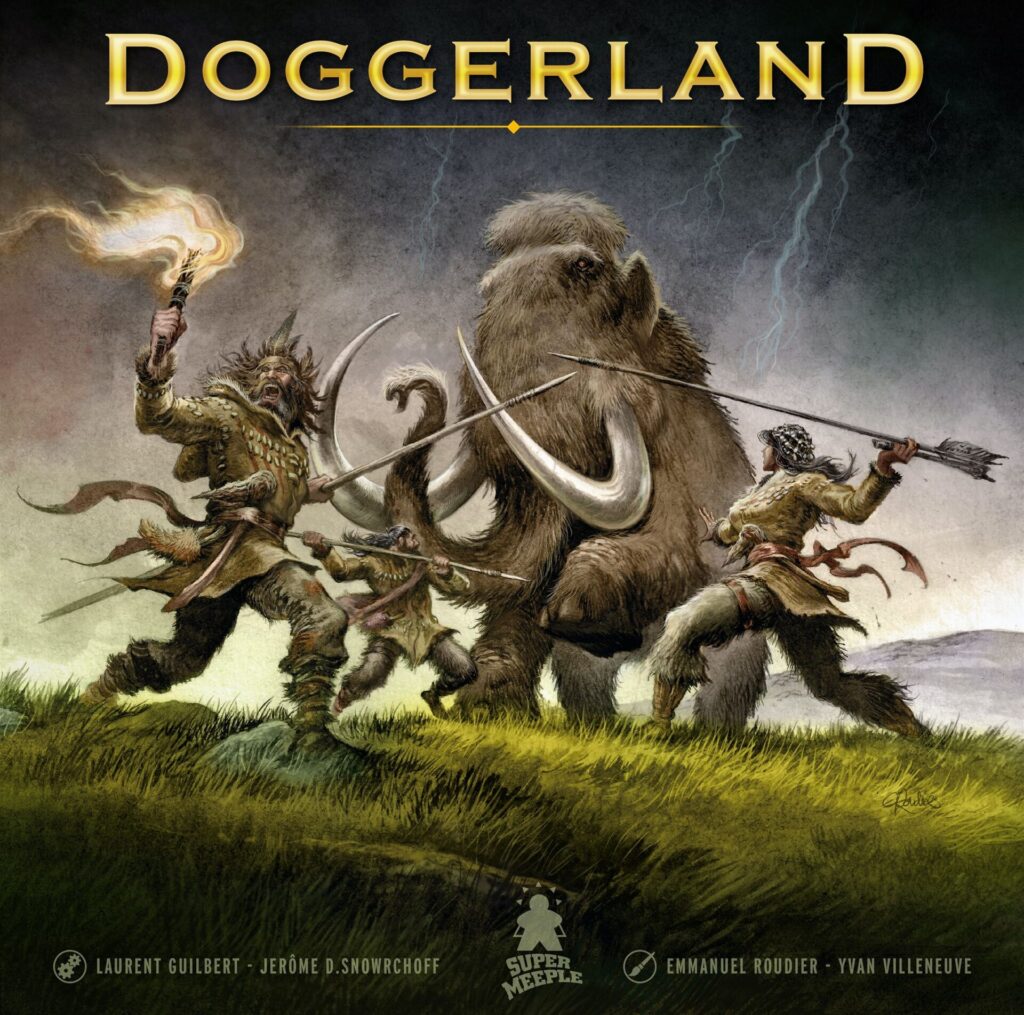
Doggerland (2023)
Designed by: Laurent Guilbert, Jérôme Daniel Snowrchoff
Published by: Super Meeple
Art by: Emmanuel Roudier, Yvan “Gawain” Villeneuve
Players: 1-4
How long to play: 60-180 minutes